


Body Pharm Tesamorelin 32 Pen
R2640,00
R2640,00
3 in stock
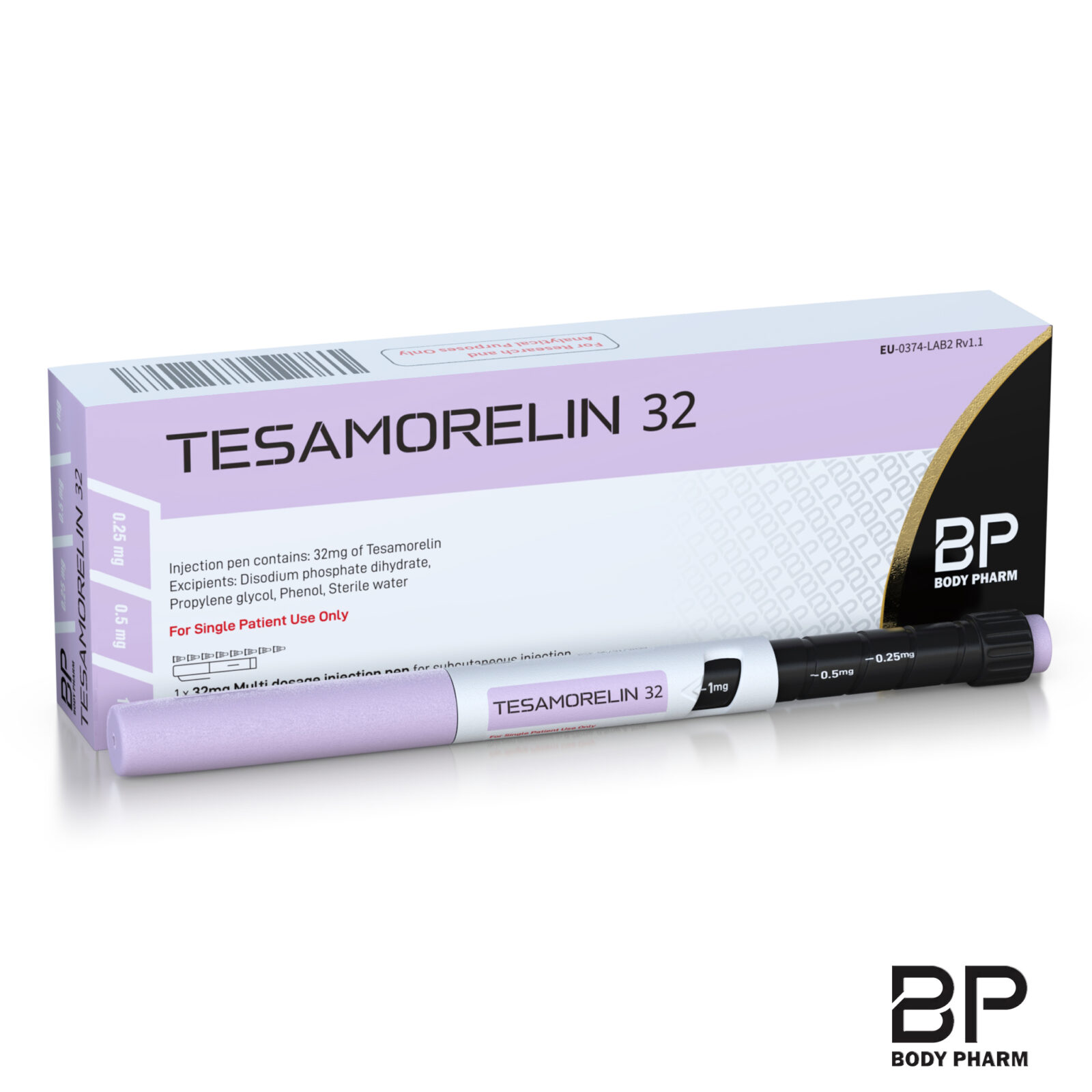
The BodyPharm Tesamorelin 32 pen is a prefilled 32 mg device that delivers 16 days of the clinical 2 mg/day subcutaneous dose used in the FDA-approved EGRIFTA protocol for HIV-associated lipodystrophy [2]. One pen covers roughly half a month of the trial regimen: the 32 mg total load divided by the 2 mg daily dose yields 16 doses, so a standard 26-week clinical course maps to about 11–12 pens at the approved dose [2].
This guide covers three things South African buyers need before checkout: the 2024 EGRIFTA label dosing and indication [2], a per-pen dose breakdown for the BodyPharm 32 mg format, and a sourcing checklist covering SAHPRA status, cold-chain handling, and the fact that no third-party certificate of analysis for this pen was retrievable at the time of writing [unverified].
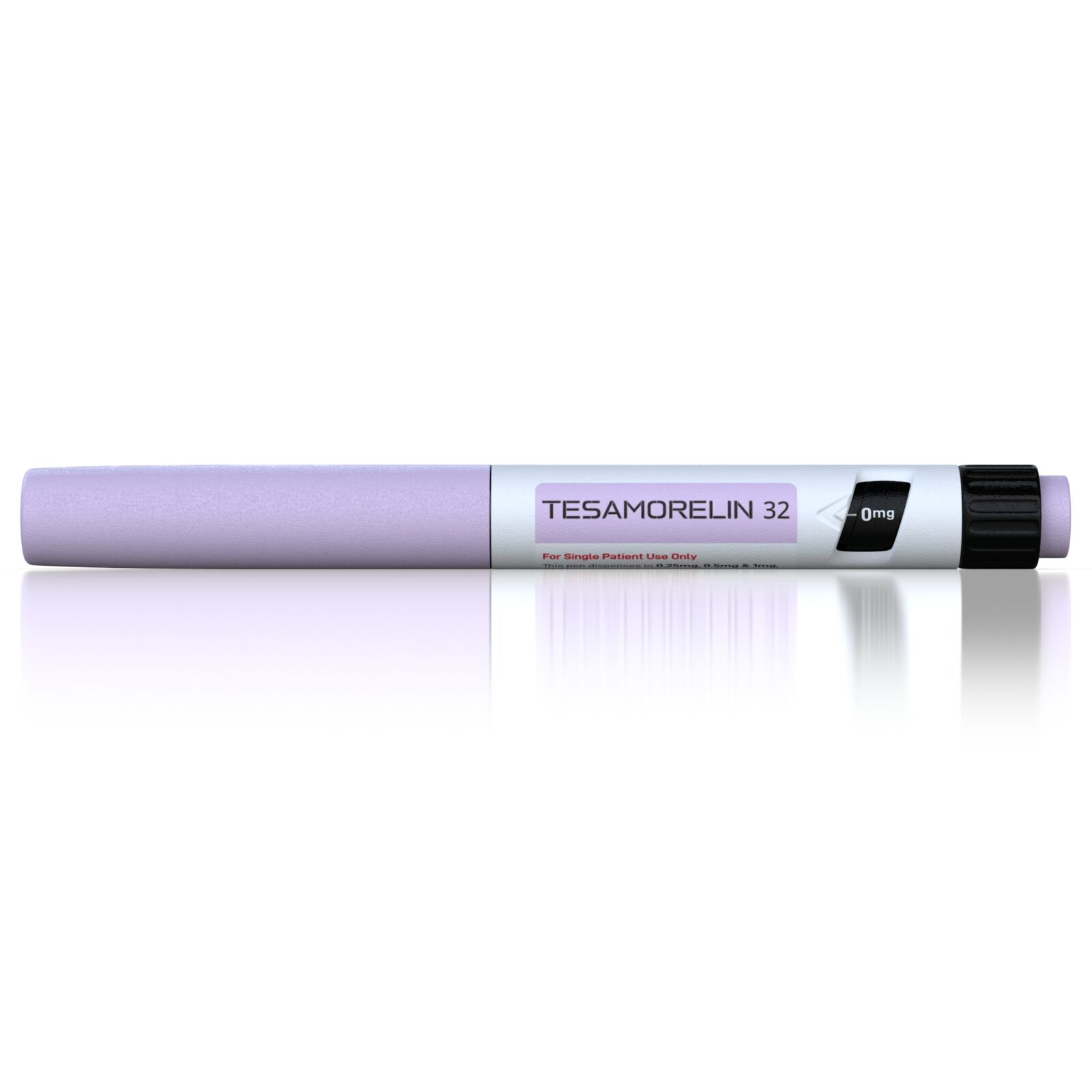
The Body Pharm Tesamorelin 32 pen is a prefilled subcutaneous injection device loaded with 32 mg of tesamorelin acetate, a synthetic analogue of human growth-hormone-releasing factor (GRF) [7]. At the FDA-approved EGRIFTA clinical dose of 2 mg/day, that 32 mg load yields up to 16 doses per pen — a figure derived from the 2024 label, not a vendor-published dose count [7].
Tesamorelin is a 44-amino-acid GRF analogue that stimulates endogenous growth hormone release from the pituitary. It binds GHRH (growth-hormone-releasing hormone) receptors on the anterior pituitary gland, triggering pulsatile GH secretion [3]. The FDA-approved indication is reduction of excess abdominal fat in HIV-infected patients with lipodystrophy [7]. The molecule has been studied in LiverTox-referenced work on insulin resistance, obesity and nonalcoholic fatty liver disease, but no new FDA indication has been added through 2024 [6][7].
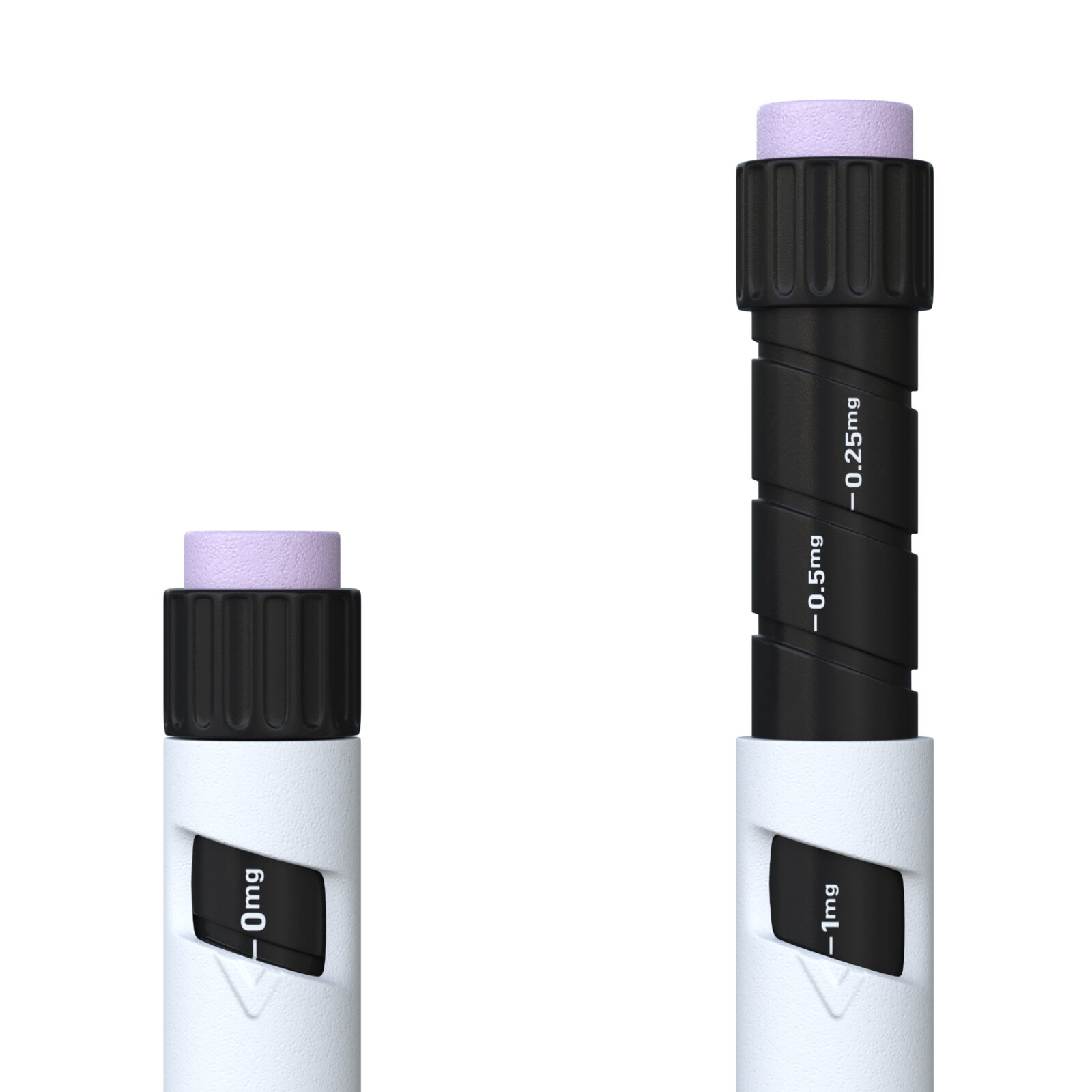
The 32 mg prefilled pen removes two failure points common to vial-and-powder peptides: it skips bacteriostatic-water reconstitution and locks in dose accuracy via the pen's click-graduated mechanism. The metered delivery system eliminates user-error concentration variation. Delivery is subcutaneous, matching the EGRIFTA route specified in the prescribing information [7]. Actual dose selection, frequency and duration require a prescribing clinician — the 16-dose-per-pen figure above is a clinical-trial-derived calculation, not a self-administration instruction.
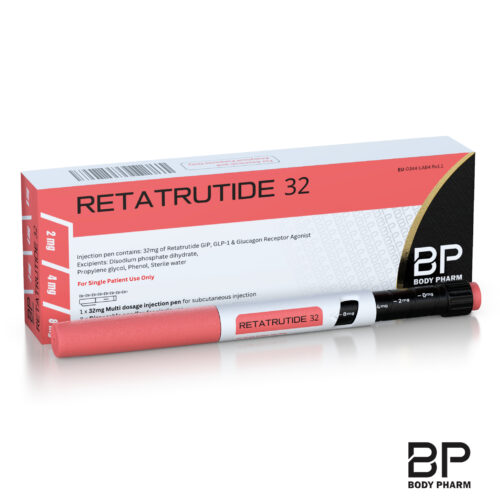
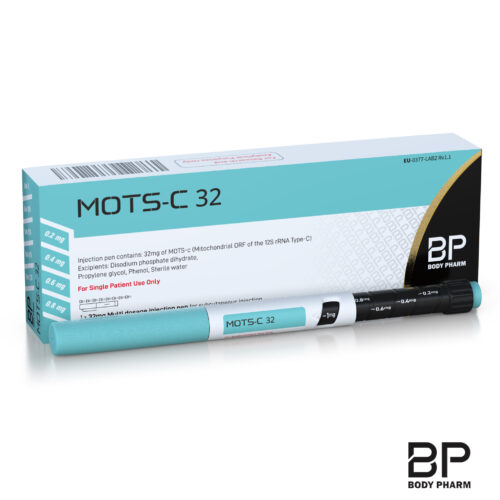
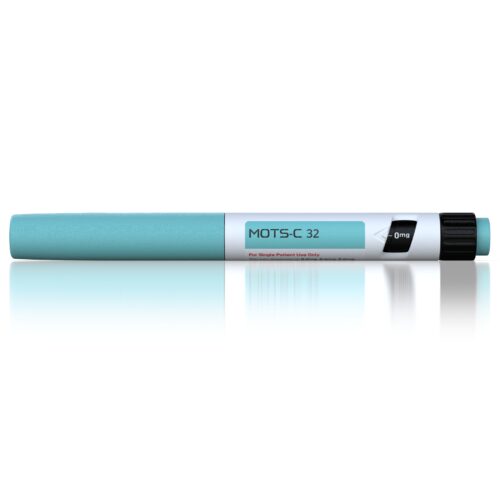
Buyers comparing peptide options at the metabolic end of the catalogue often weigh this pen against the Body Pharm MOTS-C 32 Pen for mitochondrial-metabolic effects, or the Body Pharm Tirzepatide 30 Pen, which works through GLP-1/GIP agonism rather than GHRH stimulation.
Tesamorelin stimulates the pituitary to release the body's own growth hormone rather than replacing it. It is a 44-amino-acid analogue of growth-hormone-releasing hormone (GHRH) that binds GHRH receptors on the anterior pituitary, triggering pulsatile GH secretion. This in turn raises circulating IGF-1 (insulin-like growth factor 1) [3][4]. The downstream effect on body composition follows from GH's lipolytic action on adipose tissue, not from direct adipocyte signalling by tesamorelin itself.
That distinction matters for buyers comparing this pen to exogenous somatropin. Direct GH injection bypasses the pituitary and clamps GH at supraphysiologic levels for hours. Tesamorelin preserves the hypothalamic-pituitary feedback loop, so GH output still responds to somatostatin and negative feedback from IGF-1 [4]. The peak-and-trough profile resembles endogenous secretion more closely than a flat pharmacological infusion.
Visceral adipose tissue carries a higher density of functional GH receptors than subcutaneous fat. GH activates hormone-sensitive lipase in those depots, which is why GHRH stimulation produces a disproportionate reduction in central abdominal fat rather than uniform fat loss across the body [3][4]. The pivotal randomized controlled trials (RCTs) underpinning the FDA approval were conducted in HIV-infected patients with lipodystrophy and demonstrated reduction in visceral adipose tissue at the 2 mg/day subcutaneous dose — the same dose the 2024 EGRIFTA label still specifies [4]. Efficacy data in non-HIV populations has been discussed in LiverTox in the context of insulin resistance, obesity and nonalcoholic fatty liver disease (NAFLD), but no expanded indication has been approved through 2024 [3][4].
The mechanistic contrast with a GLP-1/GIP agonist like the Body Pharm Tirzepatide 30 Pen is straightforward: tirzepatide suppresses appetite and slows gastric emptying centrally and enterically. Tesamorelin acts upstream on the GH axis, stimulating endogenous hormone release rather than replacing it. Buyers focused on mitochondrial-metabolic pathways instead often look at the Body Pharm MOTS-C 32 Pen, which works through a different signalling route.
A BodyPharm Tesamorelin 32 mg pen contains enough peptide for up to 16 daily doses when measured against the FDA-approved EGRIFTA protocol of 2 mg subcutaneous once daily [1]. Dividing the pen's 32 mg total load by the 2 mg/day clinical dose gives 16 doses per pen, which translates to roughly two weeks of therapy at the labelled clinical schedule.
The pivotal trials behind that label ran for 26 weeks of continuous daily dosing in HIV-infected patients with lipodystrophy [1][4]. That is 182 days of injections, so a buyer attempting to replicate the full clinical course at 2 mg/day would need approximately 11.4 pens, or 12 pens accounting for priming losses and the discard volume at the end of each cartridge.
| Parameter | EGRIFTA clinical protocol | BodyPharm 32 mg pen |
|---|---|---|
| Approved dose | 2 mg/day SC [1] | Not specified by manufacturer in evidence reviewed [5] |
| Total peptide load | n/a (single-use vials in trials) | 32 mg per pen |
| Doses per pen at 2 mg/day | n/a | 16 |
| Trial duration | 26 weeks / 182 days [1] | n/a |
| Pens for a full 26-week equivalent | n/a | ~11–12 |
| Approved indication | HIV-associated abdominal lipohypertrophy [1][4] | Off-label outside that indication |
The 16-dose figure is arithmetic from the EGRIFTA label's 2 mg/day specification [1], not a BodyPharm-published dosing schedule. I could not locate a BodyPharm-issued dosing chart or batch certificate of analysis for the 32 mg pen in the evidence reviewed [5]. The per-click dose calibration on the pen itself must be confirmed against the device insert at delivery. The actual prescribed dose must come from a qualified practitioner; this section is a mapping exercise, not a recommendation.
Lower daily doses for body-composition or metabolic goals in non-HIV adults are discussed in the secondary literature. LiverTox notes tesamorelin is being evaluated for insulin resistance, obesity and NAFLD [4]. No expanded FDA indication is evidenced in the 2024 EGRIFTA label [1], and I could not verify any 2023–2026 peer-reviewed RCT in non-HIV populations from the sources reviewed. Buyers comparing mechanisms against appetite-led agents like the Body Pharm Tirzepatide 30 Pen should treat any sub-2 mg protocol as off-label.
Tesamorelin is clinically proven for one population only: HIV-infected adults with lipodystrophy and excess abdominal fat [1][2]. Every other use sits outside the approved label as of 2026, and the evidence base for those off-label applications is thin in the sources reviewed here.
The pivotal RCT programme that supported FDA approval demonstrated that 2 mg/day subcutaneous tesamorelin reduced visceral adipose tissue in HIV patients with central fat accumulation. The GHRH stimulus raises endogenous GH and IGF-1, which activate lipolysis in visceral depots preferentially [1][2]. The short-term safety profile across 26-week trials was acceptable [1][2]. LiverTox describes tesamorelin as a synthetic GHRH analogue that stimulates endogenous growth hormone release, and notes ongoing evaluation in insulin resistance, obesity and nonalcoholic fatty liver disease without identifying completed 2023–2026 trials in those indications [1]. Mayo Clinic's drug monograph echoes the mechanism: tesamorelin is a hormone similar to one released from the hypothalamus, prescribed to reduce excess fat in the abdomen of HIV patients with lipodystrophy because it triggers the body's own GH secretion [4].
The 2024 EGRIFTA prescribing information retains the original HIV-associated abdominal lipohypertrophy indication and does not extend approval to general body composition, anti-ageing, muscle gain, or cognitive function [2]. MedlinePlus, reviewed in the 2024–2026 window, frames the approved use the same way [5]. Claims about non-HIV benefits should be read as off-label discussion, not regulatory endorsement.
The 32 mg pen format itself has no published RCT behind it; the clinical evidence applies to the molecule tesamorelin at 2 mg/day, regardless of presentation [1][2]. Buyers weighing tesamorelin's GHRH mechanism against alternative metabolic peptides may want to compare it with the Body Pharm MOTS-C 32 Pen for mitochondrial-pathway effects, or against the incretin route in the Body Pharm Tirzepatide 30 Pen, which acts on appetite via GLP-1/GIP rather than growth hormone release.
Tesamorelin is administered as a once-daily subcutaneous injection, rotated between the abdomen and thigh. The prefilled pen removes the reconstitution step required by older lyophilised presentations because the peptide is already dissolved in the cartridge [1][2]. MedlinePlus (reviewed 2024–2026) and Mayo Clinic both confirm the subcutaneous route as the only approved administration method [1][2].
Injection site rotation matters because repeated use of one location can cause lipoatrophy or induration, compromising both comfort and the local tissue environment for future injections. Abdominal sites should sit at least 5 cm from the navel, and any area with scarring, bruising or active lipohypertrophy should be avoided per the EGRIFTA label [3].
BodyPharm's product page recommends injecting before bed on a relatively empty stomach. The rationale is alignment with the body's natural overnight growth hormone pulse and avoidance of postprandial somatostatin blunting the GHRH signal. Somatostatin is released in response to nutrient absorption and suppresses GH secretion. That timing protocol is vendor-stated and is not drawn from a published clinical trial in the supplied evidence. The 2024 EGRIFTA prescribing information specifies once-daily subcutaneous dosing without mandating bedtime administration [3]. Treat the timing recommendation as a practical convention, not a regulated instruction.
Store the pen refrigerated at 2–8 °C, do not freeze, and protect from light. Peptides denature at ambient temperature and UV exposure degrades the molecular structure. A thawed pen should be discarded rather than injected. The prefilled format delivers a consistent metered dose per click, which is the main practical advantage over vial-and-syringe reconstitution where user error affects concentration.
A healthcare professional familiar with GHRH analogues should initiate and supervise administration, particularly for dose titration and monitoring of IGF-1, glucose tolerance and injection-site reactions [3]. For readers comparing administration routines across peptide classes, the Body Pharm Tirzepatide 30 Pen uses the same subcutaneous prefilled-pen format but on a weekly rather than daily schedule.
Tesamorelin is a prescription-only peptide in its primary regulated market: the US FDA approves EGRIFTA (tesamorelin) solely for the reduction of excess abdominal fat in HIV-infected patients with lipodystrophy, with no expanded indication added in the 2024 label update [5]. Body composition, anti-ageing and metabolic-syndrome uses sit outside that approval and remain off-label as of 2026.
The South African scheduling classification of tesamorelin under the Medicines and Related Substances Act could not be independently confirmed from the regulatory sources reviewed for this article. No SAHPRA (South African Health Products Regulatory Authority) advisory specifically naming tesamorelin or BodyPharm was located in the evidence set. That absence is not a clearance. Before purchasing the BodyPharm Tesamorelin 32 pen, confirm the current schedule with a registered South African medical practitioner or pharmacist, and check the live SAHPRA scheduling notices for any update. A registered prescriber is the only party who can lawfully issue a script if one is required.
South African medicines advertising regulations restrict promotion of unregistered medicines and off-label indications. Such claims could mislead consumers about safety and efficacy outside the approved population. Vendor pages that market tesamorelin for general fat loss, recomposition or anti-ageing in non-HIV adults are making claims unsupported by the FDA-approved indication [5] and that may fall outside permitted local advertising scope. Read product copy critically, and weigh tesamorelin's GHRH mechanism against alternative metabolic peptides such as the Body Pharm MOTS-C 32 Pen or the GLP-1/GIP-based Body Pharm Tirzepatide 30 Pen with your clinician before committing to a protocol.
Verifying a legitimate BodyPharm Tesamorelin 32 pen in the South African online market means checking seven things before payment: vendor identity, product labelling, cold-chain handling, checkout security, clinical oversight, return policy, and independent reputation. None of the SERP competitor pages for this product currently publish a checklist of this depth, so what follows is the framework we apply when evaluating peptide vendors editorially.
Vendor transparency. A registered South African business name, a physical address, and a working phone or WhatsApp line must be visible on the site. Anonymous storefronts that hide ownership are the single biggest red flag in this category.
Product labelling. The pen must display a batch number, an expiry date, and "BodyPharm" as the named manufacturer. A batch number lets you trace a certificate of analysis if one is later published or requested. As of this review, no third-party CoA for the BodyPharm Tesamorelin 32 pen was located in the evidence set [5].
Cold-chain integrity. Tesamorelin is a peptide and degrades at ambient temperature. Require the vendor to confirm refrigerated storage at the warehouse, insulated packaging with cold packs in transit, and a delivery window short enough to keep the pen cold. South Africa-wide cold-chain compliance standards for online peptide vendors were not independently verifiable for this article [1], so ask the vendor directly and keep their written reply.
Payment security. A proper HTTPS checkout with card or established payment-gateway options protects your financial data. Vendors that accept only EFT, crypto, or direct wire transfer with no reversibility should be treated with caution.
Medical consultation. Confirm a registered prescriber is involved in your protocol, particularly given tesamorelin's FDA-approved indication is limited to HIV-associated lipodystrophy [7] and non-HIV use is off-label.
Return and quality policy. A reputable vendor publishes a defective-product or cold-chain-failure replacement policy in writing. This protects you if the pen arrives damaged or thawed.
Community verification. Cross-check the vendor on independent South African forums and review platforms. Peer reports reveal patterns of late delivery, counterfeit stock, or poor customer service that a vendor's own site will not disclose. For price calibration, SERP competitors myantidote.co.za and anabolicsalot.co.za listed the BodyPharm Tesamorelin 32 pen in the R2,600–R2,640 band at SERP capture; verify current pricing on the day you order, because peptide prices move quickly.
Buyers comparing mechanisms should weigh tesamorelin against the Body Pharm MOTS-C 32 Pen or the Body Pharm Tirzepatide 30 Pen with a clinician before settling on a protocol.
The Body Pharm Tesamorelin 32 pen is best suited to adults with clinically significant visceral adiposity who are already working with a registered prescriber on a structured body composition or metabolic protocol — specifically where visceral fat has not responded adequately to sustained dietary and training interventions. The GHRH mechanism preferentially mobilises central fat, not fat across the board. Tesamorelin is FDA-approved only for reduction of excess abdominal fat in HIV-infected patients with lipodystrophy [4]; any non-HIV use sits outside that label and should be a clinician-led decision.
The 2024 EGRIFTA prescribing information lists explicit contraindications: disruption of the hypothalamic-pituitary axis (including hypothalamic or pituitary tumour, pituitary surgery, head irradiation, or head trauma), because tesamorelin depends on a functional pituitary to work. Active malignancy is a contraindication because GH can promote tumour growth. Pregnancy and known hypersensitivity to tesamorelin or mannitol are also contraindicated [4]. Breastfeeding individuals and anyone with uncontrolled diabetes or proliferative retinopathy should defer to clinician judgement before initiating, because tesamorelin raises IGF-1 and can worsen glucose control and retinal disease [4][2].
Candidates whose primary goal is appetite suppression or weight loss through caloric reduction are usually a poor mechanistic fit. Tesamorelin is a GHRH analogue, not a satiety agent, and does not reduce hunger. Those buyers should compare the GLP-1/GIP pathway of the Body Pharm Tirzepatide 30 Pen, or look at mitochondrial-targeted options like the Body Pharm MOTS-C 32 Pen, and discuss with a doctor which mechanism aligns with the outcome they actually want.
Tesamorelin sits in a different mechanistic category to the GLP-1/GIP agonists that dominate the weight-loss conversation, and that distinction is what should drive your selection. Tesamorelin is a GHRH analogue that stimulates endogenous growth hormone release, raising IGF-1 and preferentially mobilising visceral adipose tissue because GH receptors are denser in visceral depots [5][6]. It does not suppress appetite and it does not act on insulin secretion the way incretin mimetics do.
The Body Pharm Tirzepatide 30 Pen works through dual GLP-1/GIP receptor agonism, reducing caloric intake via satiety and slowing gastric emptying. If your problem is hunger and overall body fat, that mechanism fits. If your problem is a stubborn visceral compartment on an otherwise lean frame, it does not.
The Body Pharm MOTS-C 32 Pen is a mitochondrial-derived peptide aimed at metabolic flexibility and insulin sensitivity. It can run alongside tesamorelin rather than competing with it. Discuss any stacking with a prescriber before ordering.
The pen contains 32 mg of tesamorelin total, which yields 16 daily doses at the standard 2 mg clinical dose because 32 mg ÷ 2 mg per dose = 16 doses [5]. If you split to 1 mg daily for a maintenance or tolerance protocol on prescriber advice, the same pen covers 32 days. Always confirm the labelled concentration and fill volume on the carton against the batch insert before first use.
The FDA-approved EGRIFTA dose is 2 mg subcutaneously once daily, injected into the abdomen [5]. That dose was established in the HIV-associated lipodystrophy trials and remains the only dosing schedule on the 2024 label [5].
Yes. Tesamorelin is FDA-approved for the reduction of excess abdominal fat in HIV-infected patients with lipodystrophy, and the EGRIFTA label was updated in 2024 with no new indication added [5]. It is not FDA-approved for general body composition, obesity, or NAFLD, though LiverTox notes ongoing evaluation in those areas [7].
Store the pen refrigerated at 2–8 °C, protected from light, and do not freeze. Freezing denatures the peptide [3][4]. Once in use, follow the manufacturer's in-use stability window on the carton insert and discard if the solution is cloudy or discoloured.
There is no FDA-approved non-HIV indication as of the 2024 label [5]. LiverTox records that tesamorelin is being studied for insulin resistance, obesity, and NAFLD, but published efficacy outside the HIV population is not established in the sources reviewed here [7]. Off-label use is a clinical decision that belongs with a registered prescriber, and the Body Pharm MOTS-C 32 Pen or Body Pharm Tirzepatide 30 Pen may be more mechanistically appropriate depending on the goal.
The South African scheduling status of tesamorelin in 2024–2026 is unverified in the sources reviewed, so treat it as prescription-only until a SAHPRA scheduling check confirms otherwise. Consult a registered South African healthcare provider before purchase and ask the vendor to clarify their dispensing requirements.
Before ordering the BodyPharm Tesamorelin 32 pen, take these three actions: (1) Schedule a consultation with a registered South African medical practitioner or pharmacist to confirm SAHPRA scheduling status and assess whether tesamorelin's GHRH mechanism aligns with your metabolic goal; (2) Use the seven-point sourcing checklist above to vet the vendor's transparency, cold-chain handling, and payment security; (3) If your goal is appetite suppression or overall weight loss, compare tesamorelin's mechanism against the Body Pharm Tirzepatide 30 Pen or Body Pharm MOTS-C 32 Pen with your clinician to confirm the right fit for your protocol.