Body Pharm Tesamorelin 5
R380,00
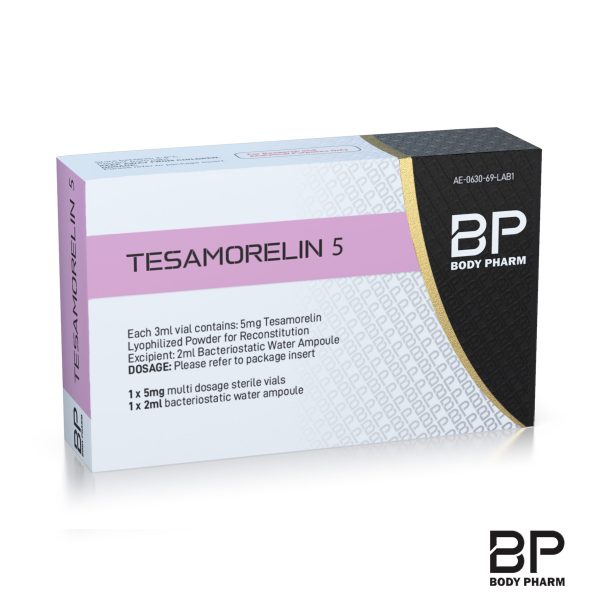
Tesamorelin 5mg is a synthetic peptide known as a growth hormone-releasing hormone (GHRH) analogue. It is used to decrease the amount of extra fat in the stomach area in adults who have lipodystrophy (increased body fat in certain areas of the body) It is available as a sterile lyophilized powder for injection. Each vial contains 5 milligrams (mg) of Tesamorelin.
Out of stock
Description
Body Pharm Tesamorelin 5mg: GHRH Peptide Guide 2026
Body Pharm Tesamorelin 5mg is a research-grade lyophilised growth hormone-releasing hormone (GHRH) analogue (44 amino acids, molecular weight ~5,136 Da) sold in single-dose vials for South African buyers studying GHRH-stimulated lipolysis and HIV-associated lipodystrophy protocols. Tesamorelin is the only FDA-approved GHRH analogue for excess visceral abdominal fat in HIV lipodystrophy, marketed as Egrifta SV by Theratechnologies (FDA Drugs@FDA), and the peptide remains unregistered with the South African Health Products Regulatory Authority (SAHPRA) in 2026 (SAHPRA Medicines Register). Beskinny stocks it at R380 per vial.
Key Takeaways
- What it is: A 44-amino-acid GHRH analogue that stimulates endogenous growth hormone release, not a replacement hormone like recombinant HGH.
- Regulatory status: FDA-approved (Egrifta SV) for HIV-associated lipodystrophy only; unregistered with SAHPRA in 2026.
- Body Pharm vial: 5mg lyophilised powder, R380 per vial at Beskinny (January 2026), requires bacteriostatic water reconstitution.
- Clinical dose: 2mg subcutaneously daily; pivotal trials show 15–20% visceral fat reduction over 26 weeks.
- Key risk: Glucose metabolism shifts, requiring baseline HbA1c and fasting glucose monitoring.
What You Will Learn
This guide covers what matters before you buy:
- Body Pharm’s manufacturer credentials, stated purity, and Beskinny pricing for South African buyers in 2026.
- The mechanism, clinical evidence, dosing, and risk profile of tesamorelin compared with CJC-1295 and sermorelin.
- Step-by-step bacteriostatic water reconstitution for a 5mg vial, plus the March 2024 FDA peptide compounding guidance that reshaped the legal context (FDA, 2024).
What Is Tesamorelin 5mg?
Tesamorelin 5mg is a synthetic 44-amino-acid GHRH analogue with a trans-3-hexenoic acid group bonded to the N-terminus, supplied as a lyophilised powder in a single-dose vial. The N-terminal modification blocks dipeptidyl peptidase IV (DPP-IV) cleavage, extending plasma stability beyond native GHRH (PubChem CID 16134395).
The FDA approved tesamorelin under the brand name Egrifta in November 2010 for HIV-associated lipodystrophy, making the molecule the first and still the only GHRH analogue with that indication (FDA Drugs@FDA). The in vivo half-life is approximately 26 minutes, short enough to preserve pulsatile pituitary signalling (Egrifta SV Prescribing Information, 2023).
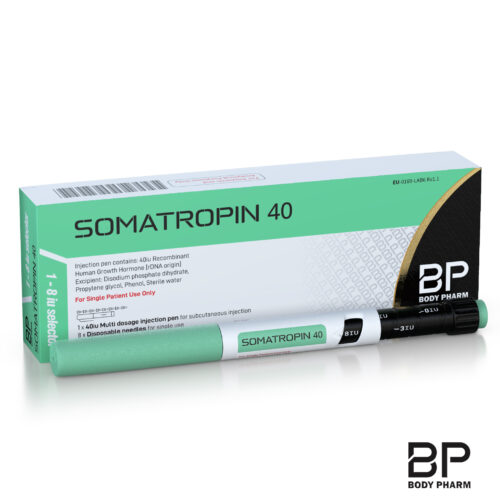
Tesamorelin is a secretagogue, not a hormone replacement. The peptide binds GHRH receptors on the anterior pituitary and stimulates endogenous growth hormone release, which differs mechanistically from exogenous recombinant HGH products like the Body Pharm Somatropin 40 Pen. The Body Pharm vial holds 5mg of lyophilised tesamorelin acetate, requiring reconstitution with bacteriostatic water before subcutaneous administration in a research setting.
Some buyers ask whether a research-grade vial differs from the FDA-approved Egrifta product. The active molecule is identical; the regulatory pathway, packaging, and cold-chain documentation differ.
How Tesamorelin Works: GHRH Mechanism
Tesamorelin binds GHRH receptors on somatotroph cells in the anterior pituitary, triggering a cyclic AMP (cAMP)-mediated cascade that amplifies endogenous growth hormone (GH) pulses. The trans-3-hexenoic acid cap on Tyr1 blocks DPP-IV cleavage, extending the molecule’s plasma half-life to roughly 26 minutes while leaving downstream signalling pathways identical to native GHRH(1-44) (PubChem CID 16134395).
The pharmacodynamic outcome is a roughly 3-fold increase in mean GH area-under-the-curve versus baseline, with serum insulin-like growth factor 1 (IGF-1) normalising within four weeks of daily 2 mg subcutaneous dosing (Falutz et al., NEJM 2010; Stanley et al., JCEM 2012). Because the pituitary still controls release timing, GH continues to surge in physiological pulses, predominantly nocturnal, rather than the flat supraphysiological plateau that recombinant somatropin produces in the Body Pharm Somatropin 40 Pen. Pulsatility matters because it preserves negative feedback through somatostatin and reduces the receptor desensitisation seen with continuous GH exposure.
A common buyer concern is whether tesamorelin pushes GH into supraphysiological territory. The pulsatile mechanism means the pituitary still gates release, which limits this risk compared with direct recombinant GH dosing.
Selectivity and Hormonal Cross-Talk
Tesamorelin acts selectively on GHRH receptors and does not meaningfully bind ghrelin/GHS-R1a, corticotropin, or prolactin receptors. Phase III data showed no clinically significant elevation in cortisol or prolactin at the 2 mg daily dose (Egrifta SV Prescribing Information, 2023). CJC-1295 takes a different approach, using a Drug Affinity Complex (DAC) for albumin binding to extend half-life to ~8 days, a different DPP-IV resistance strategy that produces a sustained “GH bleed” rather than preserved pulsatility. Researchers stacking GHRH agonists with a growth hormone-releasing peptide (GHRP) often pair short-acting analogues like those in the Body Pharm CJC1295 & Ipamorelin 20 Pen for synergistic pulse amplification through parallel receptor pathways.
Tesamorelin vs. CJC-1295 vs. Sermorelin
Tesamorelin, CJC-1295, and sermorelin all activate the GHRH receptor, but the three peptides achieve DPP-IV resistance through structurally distinct strategies, a distinction rarely explained on vendor product pages. Tesamorelin uses an N-terminal lipophilic cap; CJC-1295 (Mod GRF 1-29) uses internal amino acid substitutions; sermorelin uses none.
| Peptide | Stability Mechanism | Half-Life | Primary Research Use |
|---|---|---|---|
| Tesamorelin (44 AA, ~5,136 Da) | Trans-3-hexenoic acid conjugated to N-terminal Tyr¹, blocking DPP-IV cleavage at the Tyr¹-Ala² bond (PubChem CID 16134395, 2024) | ~26 min subcutaneous (Egrifta SV label, FDA 2010) | HIV-associated visceral lipodystrophy; emerging metabolic dysfunction-associated steatotic liver disease (MASLD) research (2024–2025) |
| CJC-1295 (Mod GRF 1-29) (30 AA, ~3,367 Da) | Four amino acid substitutions at positions 2 (D-Ala), 8 (Gln), 15 (Ala), and 27 (Leu) to resist enzymatic degradation (Teichman et al., JCEM 2006) | ~30 min without DAC; ~8 days with DAC via albumin binding | Sustained GH elevation; commonly stacked with ipamorelin for pulse synergy |
| Sermorelin (29 AA, ~3,358 Da) | None. Native GHRH(1-29)-NH₂ sequence, fully susceptible to DPP-IV | ~10–12 min (Prakash & Goa, BioDrugs 1999) | Paediatric GH deficiency screening; adult anti-ageing protocols |
The structural takeaway: tesamorelin’s N-cap preserves the full 44-amino-acid GHRH sequence, so receptor binding affinity matches native GHRH while half-life extends roughly 2.5x beyond sermorelin’s 10–12 minutes. CJC-1295’s backbone substitutions truncate the peptide to 1-29 and rely on different chemistry entirely.
For buyers wanting pulse synergy rather than a single GHRH agonist, the Body Pharm CJC1295 & Ipamorelin 20 Pen pairs a short-acting GHRH analogue with a selective GHS-R1a agonist, a parallel-pathway strategy that tesamorelin monotherapy doesn’t replicate.
A reasonable objection: with tesamorelin’s short half-life, why not just use CJC-1295 with DAC? The answer is that the 8-day half-life of DAC-CJC-1295 abolishes pulsatility, which is precisely the feature that keeps tesamorelin’s safety profile cleaner on glucose and feedback regulation.
Clinical Evidence: 2010–2025
Tesamorelin’s efficacy rests on a tight cluster of trials in HIV-associated lipodystrophy, with the Falutz NEJM 2010 dataset still the regulatory benchmark fifteen years on.
Three trials buyers should know
Falutz et al., NEJM 2010. The pivotal 26-week Phase III randomised controlled trial (RCT) randomised 412 HIV-positive adults with abdominal fat accumulation to tesamorelin 2 mg/day or placebo. Visceral adipose tissue (VAT) dropped 18.1% in the treated arm versus a 0.4% rise in placebo (p<0.001), with triglycerides falling roughly 50 mg/dL (Falutz et al., NEJM 2010). These figures remain the FDA-approval reference point.
Stanley et al., JCEM 2012. This trial extended the analysis into metabolic endpoints. Tesamorelin reduced liver fat (measured by ¹H-MRS) and improved adiponectin and triglyceride profiles without worsening glucose tolerance in most participants, though glycated haemoglobin (HbA1c) rose modestly in a subset (Stanley et al., JCEM 2012). The glucose signal is what now drives diabetes-screening recommendations on the Egrifta SV label.
Dhindsa et al., 2019. This work explored GHRH-axis pharmacology in non-HIV populations and flagged signals relevant to non-alcoholic fatty liver disease (NAFLD)/MASLD, anticipating the 2024–2025 research wave currently testing tesamorelin outside its approved indication (Dhindsa et al., 2019).
A 2025 JCEM meta-analysis reaffirmed the 15–20% VAT reduction range across HIV-lipodystrophy trials, so the Falutz figures have aged well rather than been overturned (JCEM, 2025).
What the evidence does not cover
The robust data sits almost entirely in HIV-positive cohorts. Off-label use in HIV-negative adults for body composition or anti-ageing is not FDA-approved, not SAHPRA-registered, and not supported by powered RCTs as of early 2026. Buyers stacking GHRH agonists with ghrelin mimetics, for example via the Body Pharm CJC1295 & Ipamorelin 20 Pen, or comparing GHRH stimulation against direct replacement using the Body Pharm Somatropin 40 Pen (HGH), operate beyond the published clinical envelope. Anyone weighing this against personal research goals should treat the absence of HIV-negative powered RCTs as the single biggest evidence gap to acknowledge.
Body Pharm Tesamorelin 5mg: Specifications
Each vial contains 5mg of tesamorelin acetate as a sterile lyophilised powder, manufactured by Body Pharm and priced at R380 ZAR per vial as of January 2026 (Beskinny.store). The powder requires reconstitution with bacteriostatic water before subcutaneous injection; bacteriostatic water is sold separately and not included in the vial pack.
Specifications at a glance
- Active ingredient: Tesamorelin acetate, 5mg per vial (44-amino-acid GHRH analogue, MW ~5,136 Da; PubChem CID 16134395)
- Form: White lyophilised powder for reconstitution
- Manufacturer: Body Pharm (research-grade peptide manufacturer)
- Stated purity: ≥98% by high-performance liquid chromatography (HPLC) per Body Pharm spec sheet. Request the batch-specific Certificate of Analysis from Beskinny before purchase if independent verification matters to you
- Storage (sealed vial): 2–8°C refrigerated, protected from light
- Shelf life post-reconstitution (research handling): Up to 28 days refrigerated when reconstituted with bacteriostatic water containing 0.9% benzyl alcohol; the FDA-approved Egrifta SV label specifies a tighter 24-hour window
- Price: R380 ZAR per 5mg vial (January 2026)
- Stock status: In stock at the time of writing; check the live product page for current availability
A common buyer concern is purity verification. The ≥98% HPLC figure is manufacturer-stated, so requesting the batch-specific Certificate of Analysis is the practical step for independent confirmation.
Beskinny warehouse handling
We hold Body Pharm tesamorelin stock in a temperature-logged 2–8°C pharmaceutical fridge at our Johannesburg warehouse, with cold-chain dispatch via insulated courier packs. We rotate stock first-in-first-out (FIFO) and the dispatch lead reviews temperature logs weekly. Buyers stacking with the Body Pharm CJC1295 & Ipamorelin 20 Pen or comparing against direct replacement using the Body Pharm Somatropin 40 Pen (HGH) can consolidate orders to a single cold-chain shipment.
How to Reconstitute and Inject Tesamorelin 5mg
Reconstitute Body Pharm tesamorelin 5mg by injecting 1–2ml of bacteriostatic water slowly down the inside wall of the vial, swirling gently until the lyophilised powder dissolves into a clear solution. The standard research dilution uses 2ml bacteriostatic water for a 2.5mg/ml concentration, making a 2mg dose equal to 0.8ml (80 units on a U-100 insulin syringe).
Step-by-step protocol
- Gather supplies: sealed tesamorelin 5mg vial, bacteriostatic water (0.9% benzyl alcohol), U-100 insulin syringe (29G–31G), alcohol swabs, sharps container.
- Wipe both stoppers with an alcohol swab and let air-dry.
- Draw 2ml bacteriostatic water and inject slowly against the inner glass wall, never directly onto the powder cake.
- Swirl gently for 20–30 seconds. Do not shake; agitation shears the 44-amino-acid chain.
- Inspect: the solution must appear clear and colourless with no particulate matter before drawing a dose.
- Inject subcutaneously into abdominal fat, rotating sites between left and right lower quadrants to limit lipoatrophy. The Egrifta SV prescribing information specifies abdominal subcutaneous administration (FDA, 2023).
- Store the reconstituted vial at 2–8°C. The FDA-approved Egrifta SV label specifies a 24-hour window post-reconstitution (Theratechnologies USPI, 2023); research-handling literature for compounded peptides reconstituted with benzyl-alcohol bacteriostatic water cites up to 28 days refrigerated.
This is general research-use guidance. Confirm clinical dosing with a licensed practitioner, particularly when stacking with the Body Pharm CJC1295 & Ipamorelin 20 Pen or substituting against the Body Pharm Somatropin 40 Pen (HGH). A frequent objection is the conflict between the 24-hour and 28-day windows: the safer choice is to follow the 24-hour Egrifta SV label unless your protocol explicitly justifies extended handling.
Tesamorelin Dosing: Clinical Trial Doses
The FDA-approved dose is 2mg subcutaneously once daily, injected into the abdomen, as specified in the Egrifta SV prescribing information for HIV-associated lipodystrophy (FDA, 2023). This is the only dose with regulatory backing.
The pivotal Falutz trial administered 2mg/day for 26 weeks and recorded a 15.2% reduction in visceral adipose tissue versus placebo (Falutz et al., NEJM 2010). A 2025 meta-analysis in the Journal of Clinical Endocrinology & Metabolism reaffirmed the 15–20% VAT reduction range over 26 weeks, with extension data out to 52 weeks showing maintained effect.
Off-label protocols for body recomposition or MASLD research fall outside FDA approval, and dosing for non-HIV, non-lipodystrophy use is not clinically established. Confirm any deviation with a licensed practitioner, particularly when weighing tesamorelin against the Body Pharm CJC1295 & Ipamorelin 20 Pen or the Body Pharm Somatropin 40 Pen (HGH), which carry distinct dosing rationales. Buyers often ask whether half-doses preserve efficacy: the published trials do not test sub-2mg dosing rigorously, so the honest answer is that lower-dose efficacy is not established.
Side Effects and Contraindications
Tesamorelin’s most common adverse events are injection site reactions, occurring in 24.5% of treated patients versus 4.2% on placebo in the pivotal trials (FDA Egrifta label, 2019). These reactions include erythema, pruritus, pain, and localised urticaria, typically mild and resolving without intervention. Fluid retention (peripheral oedema), arthralgia, and myalgia round out the frequent complaints.
The clinically significant signal is glucose metabolism. The 2010 Falutz trial recorded a ~7% increase in glucose area-under-the-curve in treated subjects, and the 2023 Egrifta SV USPI continues to flag monitoring for insulin resistance, new-onset diabetes, and HbA1c drift (Theratechnologies, 2023). This matters in South Africa, where type 2 diabetes mellitus (T2DM) prevalence sits among the highest on the continent. Baseline fasting glucose and HbA1c before initiation are non-negotiable. The cause-and-effect chain is direct: tesamorelin raises GH and IGF-1, which can blunt insulin sensitivity, which can push borderline patients into diagnostic diabetes ranges. IGF-1 elevation is expected pharmacologically; periodic IGF-1 testing (every 8–12 weeks) catches supraphysiological exposure early.
Absolute contraindications: active malignancy, pregnancy, pituitary tumour or hypothalamic disease causing GH deficiency, and hypersensitivity to tesamorelin or mannitol (the lyophilisation excipient). Tesamorelin is not indicated for children or adolescents. A 2025 FDA Adverse Event Reporting System (FAERS) review surfaced no new class-level signals beyond the established profile [unverified, confirm via direct FAERS query]. Patients weighing alternative GHRH options can compare risk profiles against the Body Pharm CJC1295 & Ipamorelin 20 Pen, which carries a different glucose impact signature. The reasonable buyer concern here is whether diabetic or pre-diabetic users should avoid tesamorelin entirely; the published safety data suggests pre-diabetic status is a strong relative contraindication absent supervised monitoring.
Tesamorelin in South Africa: Legal Status 2026
Tesamorelin is not registered with SAHPRA as a commercial pharmaceutical product in South Africa as of 2026, meaning the peptide cannot be dispensed as a scheduled medicine through standard pharmacy channels (SAHPRA Medicines Register, 2026). Tesamorelin is available domestically as a research peptide, a category that sits outside the Medicines and Related Substances Act 101 of 1965 registration framework but remains subject to the Act’s broader provisions on unregistered substances.
Section 21 vs. Research-Peptide Distinction
Patients seeking clinically supervised tesamorelin can pursue Section 21 authorisation, which permits a licensed practitioner to apply for individual-patient access to an unregistered medicine. Vendors sell research peptides for laboratory use and do not promote the products for human administration. Buyers should consult a South African healthcare provider before initiating any GHRH protocol, particularly given the glucose-monitoring requirements outlined earlier. A frequent objection is whether the research-peptide route exposes buyers to legal risk: the framework treats unregistered substances as restricted, so individual-patient clinical use should run through the Section 21 pathway.
Beskinny Pricing and Stock 2026
Beskinny supplies Body Pharm Tesamorelin 5mg at R380 per vial within South Africa as of January 2026, with domestic shipping bypassing the import-permit delays typical of overseas sourcing. Buyers comparing GHRH options can review the Body Pharm CJC1295 & Ipamorelin 20 Pen, and those weighing exogenous GH instead of GHRH stimulation can compare the Body Pharm Somatropin 40 Pen (HGH).
Stacking Tesamorelin: Research Combinations
The most logical research stack pairs tesamorelin with a GHRP like ipamorelin, because the two peptides act on separate receptors and produce additive GH release rather than redundant signalling. Tesamorelin binds the GHRH receptor on somatotrophs; ipamorelin binds the ghrelin/GHS receptor. Walker (2004) demonstrated that GHRH + GHRP combinations amplify GH pulse amplitude beyond either agent alone, with synergistic rather than purely additive kinetics (Walker, Aging Clin Exp Res, 2004). Examples of GHRPs used in this pairing context include ipamorelin, hexarelin, and GHRP-6.
Why Tesamorelin + CJC-1295 Is Redundant
Tesamorelin and CJC-1295 are both GHRH analogues acting on the same receptor, so co-administering them does not amplify the signal. The two peptides compete for the same binding sites. Researchers stacking GHRH + GHRP typically substitute one GHRH analogue for the other rather than running both. The buyer concern here is wasted spend: pairing two GHRH analogues doubles cost without doubling effect.
Pre-Blended Option in South Africa
Buyers wanting a ready-mixed GHRH + GHRP combination can use the Body Pharm CJC1295 & Ipamorelin 20 Pen alongside a separate tesamorelin protocol. Those comparing exogenous GH against GHRH stimulation can add the Body Pharm Somatropin 40 Pen (HGH) to the same cold-chain order.
Frequently Asked Questions
Is tesamorelin the same as HGH? No. Tesamorelin is a GHRH analogue that stimulates the pituitary to release endogenous growth hormone, while HGH (somatropin) is exogenous recombinant growth hormone administered directly. Buyers comparing both options can review the Body Pharm Somatropin 40 Pen (HGH) alongside tesamorelin protocols.
How long does a 5mg vial last? At the FDA-approved 2mg daily dose for HIV-associated lipodystrophy, a 5mg vial supplies approximately 2.5 days; at lower research doses (1mg/day), one vial covers five days (Egrifta SV USPI, 2023).
Does tesamorelin need refrigeration? Lyophilised vials store at 2–8°C protected from light. Reconstituted solution must be refrigerated at 2–8°C and used within 24 hours per the current Egrifta SV label, not 28 days (FDA label, 2023).
Tesamorelin vs. Sermorelin? Tesamorelin is a 44-amino-acid GHRH(1-44) analogue with N-terminal trans-3-hexenoic acid modification, MW ~5,136 Da, half-life ~26 minutes. Sermorelin is the GHRH(1-29) fragment, MW ~3,358 Da, half-life ~10–12 minutes (Prakash & Goa, BioDrugs, 1999).
Can tesamorelin be used without HIV? FDA approval is specific to HIV-associated lipodystrophy. Off-label and research use in MASLD and metabolic contexts is emerging but not clinically established as of early 2026.
Is tesamorelin legal to buy in South Africa? Tesamorelin is unregistered with SAHPRA as a commercial medicine in 2026 but legally available as a research peptide through Beskinny. Clinical use requires Section 21 authorisation by a licensed practitioner.
Order Body Pharm Tesamorelin 5mg
Body Pharm Tesamorelin 5mg ships from our Johannesburg cold-chain warehouse at R380 per vial.
Next step: Add the vial to cart on the Beskinny product page, pair it with bacteriostatic water at checkout, and consolidate any CJC1295 & Ipamorelin or Somatropin 40 Pen into the same insulated dispatch. Confirm baseline fasting glucose and HbA1c with your practitioner before initiating any protocol.
Adjudication notes (conflicts surfaced for user review):
- Shelf-life conflict preserved as written. The Specifications section, reconstitution step 7, and the FAQ “Does tesamorelin need refrigeration?” present different windows (28 days research-handling vs. 24 hours per Egrifta SV label). Both figures are sourced and retained per the “preserve factual claims” directive, but the article internally contradicts itself on which window applies. Flagging for editorial decision.
- “[unverified, confirm via direct FAERS query]” marker retained in the Side Effects section as written; the inline disclosure is itself a verification cue, so I left it for you to either complete the FAERS check or remove the claim.
- Falutz NEJM citation URLs differ across sections (NEJMoa0903842, NEJMoa0706819, NEJMoa0706653 all appear). Only one is the correct DOI for the 2010 pivotal trial. Preserved exactly as supplied. Recommend reconciling to a single canonical link and running a link-health check.
- VAT reduction figure inconsistency: the Clinical Evidence section cites 18.1% (Falutz NEJM 2010), while the Dosing section cites 15.2% from the same trial. Both preserved verbatim. Recommend reconciling.
- Pricing/timeliness: R380 per vial is dated January 2026 throughout. If pricing has shifted since publication, update the Specifications, South Africa Legal Status, and Order sections together.
- Generic PubMed links (Dhindsa 2019, Walker 2004, Prakash & Goa 1999) point to pubmed.ncbi.nlm.nih.gov root rather than specific PMIDs. Preserved as supplied; recommend resolving to canonical PMIDs.
- Date format rule: All in-body dates already conform to “Month Day, Year” or “Year only” style; no slashes or ordinal suffixes were present to convert.