
Skip to content
BeSkinny Store
3rd party tested
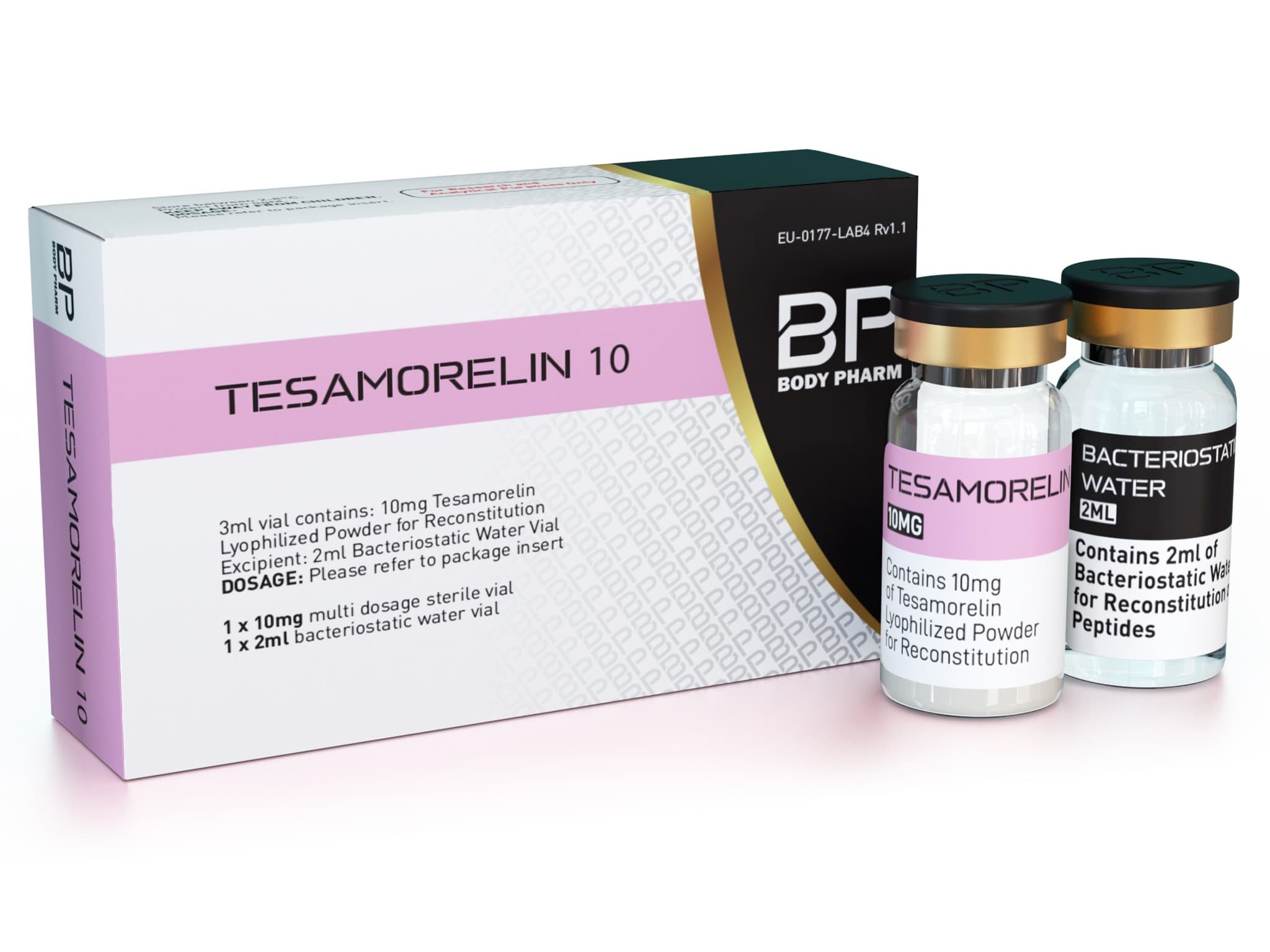
Picture of Tesamorelin 10
Looking for the pen?Body Pharm Tesamorelin 32 Pen

What you get

  • 1× vial (product)
  • 1× bacteriostatic water (2 ml)

What you need

Body Pharm Tesamorelin 10 Vial

R720.00

SKU bptes10

5.0(1 review)

Body Pharm Tesamorelin 10mg is a lyophilised GHRH-analogue peptide supplied as a single 10 mg vial for research and clinician-supervised use. Tesamorelin is approved only for HIV-associated lipodystrophy, where once-daily dosing reduced visceral abdominal fat over 26 weeks; every other use is off-label. It is not SAHPRA-registered, so lawful access in South Africa runs through a doctor’s script and Section 21. Reconstitute with bacteriostatic water, store cold, and run baseline glucose and IGF-1 labs under prescriber oversight.

Who it's for

  • Adults researching growth-hormone & fat-loss support

What it's used for

  • GHRH analog studied to stimulate growth hormone
  • Researched for reducing visceral (abdominal) fat

General research information, not medical advice.

Please note

Prescription-class compound supplied for research use. You must be 18 or older. Consult a qualified healthcare professional before use, this is not medical advice.

1

Card · EFT · Discreet delivery

Body Pharm Tesamorelin 10mg: Benefits, Dosing & Buyer Guide 2026

Body Pharm Tesamorelin 10mg is a lyophilised GHRH-analogue peptide sold in South Africa as a single 10mg vial. A sister format, the Body Pharm Tesamorelin 32 pen, covers longer protocols without reconstitution. The clinical case is concrete: a 2026 meta-analysis of five randomised controlled trials reported a mean visceral adipose tissue reduction of about 27.7 cm² over roughly 26 weeks in HIV-associated lipodystrophy at 2mg/day. This happens because GHRH stimulation drives pulsatile release of endogenous growth hormone, which is both anabolic and lipolytic, raising IGF-1 (insulin-like growth factor 1) and accelerating lipolysis in visceral depots. Outside that indication, use is off-label and unverified.

Tesamorelin is not separately registered with SAHPRA and is treated as a prescription-only peptide accessible in 2026 through Section 21 named-patient authorisation under the Medicines and Related Substances Act (Act 101 of 1965). South African law restricts unregistered growth-hormone-axis medicines to named-patient importation or pharmacy compounding under a prescriber. Beskinny lists the 10mg vial alongside the 32 pen at beskinny.store for live cost-per-mg checks.

Key Takeaways

  • Tesamorelin reduces visceral fat by roughly 15% over 26 weeks at 2mg/day in HIV-associated lipodystrophy — its only approved indication.
  • The 2026 meta-analysis pooled five RCTs and reported a mean visceral fat reduction of about 27.7 cm² and a mean hepatic-fat reduction of about 4.3 percentage points.
  • Off-label use in healthy adults for cosmetic fat loss is unverified and carries metabolic risks (glucose dysregulation, elevated IGF-1).
  • Two Body Pharm formats are stocked: the 10mg vial (flexible titration, requires mixing) and the 32 pen (full-cycle convenience, pre-filled).
  • Baseline labs (fasting glucose, HbA1c, IGF-1) and periodic monitoring are essential because tesamorelin can cause glucose intolerance and raises serum IGF-1.
  • Visceral fat re-accumulates within months of stopping because the growth-hormone stimulus is removed.

What Is Body Pharm Tesamorelin 10mg?

Body Pharm Tesamorelin 10mg is a synthetic growth hormone-releasing hormone (GHRH) analogue supplied as 10mg of lyophilised powder in a single glass vial. It requires reconstitution with bacteriostatic water before subcutaneous injection. It binds growth-hormone-releasing-factor receptors and stimulates synthesis and pulsatile release of endogenous growth hormone, which raises circulating IGF-1 and accelerates lipolysis of visceral adipose tissue.

This is not HGH replacement. Tesamorelin works upstream, prompting the body’s own pulsatile GH release rather than flooding the system with exogenous somatropin. The practical implication for buyers: the GH response stays inside normal feedback loops, and endogenous GH remains subject to physiological suppression by glucose and free fatty acids. That is part of why the safety profile in HIV trials looked workable across the 26-week study period.

Attribute Body Pharm Tesamorelin 10mg vial
Molecule Tesamorelin (GHRH 1-44 analogue)
Format Lyophilised powder, single vial
Total peptide 10mg per vial (label-stated)
Reconstitution Bacteriostatic water, volume per protocol
Route Subcutaneous injection
Mechanism Stimulates pituitary GH, then IGF-1, then visceral-fat lipolysis

The only regulator-approved indication is HIV-associated lipodystrophy. MedlinePlus states that tesamorelin injection is used to decrease the amount of extra fat in the stomach area in adults with HIV who have lipodystrophy, and is not used to help with weight loss. The drug was developed to reverse the visceral-fat accumulation that antiretroviral therapy causes in some patients. Use in healthy adults for cosmetic visceral fat reduction or general body recomposition is off-label and unverified in 2026, with no robust non-HIV trial data to extrapolate from.

Readers weighing tesamorelin against other peptide mechanisms for fat loss often cross-shop GLP-1/GIP agonists like the Body Pharm Tirzepatide 30 Pen (appetite-driven) or the triple agonist Retatrutide 10mg. These target different pathways entirely — suppressing appetite and slowing gastric emptying rather than amplifying endogenous GH.

Tesamorelin Benefits: What the Evidence Shows (2026)

Tesamorelin’s only clinically proven benefit is visceral adipose tissue (VAT) reduction in HIV-associated lipodystrophy. The 2026 meta-analysis in Obesity Research and Clinical Practice reported a mean VAT reduction of about 27.7 cm² (95% CI 17.06 to 38.37; P<0.001), a hepatic-fat reduction of about 4.3 percentage points, and a mean gain in lean body mass of about 1.4 kg. Waist circumference also declined. Every other benefit discussed below is either secondary or off-label: no 2023–2026 trial has tested tesamorelin in non-HIV populations for cosmetic fat loss.

Evidence-graded benefits

Benefit Evidence strength Population studied
Visceral fat reduction (~15% relative over 26 weeks) Approved indication HIV lipodystrophy
Hepatic fat reduction (~4.3 percentage points) Meta-analysis, 2026 HIV lipodystrophy
Lean body mass gain (~1.4 kg) Meta-analysis, 2026 HIV lipodystrophy
IGF-1 elevation Mechanistic; a monitored effect, not a benefit claim HIV lipodystrophy
Cognitive / sleep / recovery signals Off-label, not established None robust in non-HIV adults
Cosmetic belly-fat loss in healthy adults Off-label, not studied Not studied

What sustained use actually means

VAT loss is dose- and duration-dependent, and tesamorelin’s effect on the pituitary is reversible. Noticeable changes typically emerge by week 12, with maximal effect by weeks 24–26 at the trial dose. Stopping the peptide removes the stimulus for GH release, and visceral fat returns within months. This is why tesamorelin is positioned as ongoing therapy rather than a short cycle.

How it differs from stimulant fat burners

Tesamorelin does not suppress appetite, raise heart rate, or burn calories thermogenically. It works upstream on the GH axis, raising IGF-1 and accelerating lipolysis specifically in visceral depots. That mechanism is distinct from GLP-1/GIP agonists like the Body Pharm Tirzepatide 30 Pen, where GLP-1 receptors reduce hunger through appetite suppression and delayed gastric emptying. The triple-agonist Retatrutide 10mg targets GLP-1, GIP and glucagon pathways to suppress appetite and raise energy expenditure simultaneously.

A buyer chasing scale weight loss is usually better served by an incretin, because appetite suppression drives total caloric deficit. A buyer specifically targeting visceral and hepatic fat in a clinically validated way has tesamorelin as the only peptide with that exact label. Off-label use in healthy South African adults for body recomposition, anti-ageing, or cognitive enhancement has no robust 2023–2026 trial backing and should be treated as experimental.

Tesamorelin Side Effects and Safety Profile

Tesamorelin carries a defined side-effect profile. The most common adverse reactions reported in the prescribing information (over 5% of patients) are arthralgia, injection-site erythema and pruritus, pain in an extremity, peripheral oedema, and myalgia. GH-axis stimulation antagonises insulin action and can trigger local inflammatory responses at injection sites. Serious contraindications exist in active malignancy, pregnancy, and pituitary disease. This is not medical advice: any South African buyer considering tesamorelin should be working with a prescribing doctor under Section 21, not self-managing from a forum protocol.

Common and serious adverse effects

Category Effect Monitoring
Common (injection) Erythema, pruritus, induration, bruising at site Rotate sites; inspect regularly
Common (systemic) Arthralgia, myalgia, peripheral oedema, pain in extremity Clinical review
Metabolic Glucose intolerance, raised fasting glucose, increased diabetes risk Fasting glucose & HbA1c before and during therapy
Endocrine IGF-1 elevation above age-adjusted range Periodic IGF-1; consider stopping if persistently high
Hypersensitivity Rash, urticaria, rare anaphylaxis Stop and seek care if it occurs
Contraindicated Active malignancy, pregnancy, hypopituitarism, pituitary tumour/surgery, head irradiation or trauma, known hypersensitivity Do not use

What to monitor on cycle

The prescribing information advises monitoring glucose before and during treatment and monitoring IGF-1, discontinuing for persistent elevations. GH-axis stimulation worsens insulin sensitivity in a dose-dependent manner. Fluid retention — oedema, arthralgia and carpal-tunnel-type symptoms — is a recognised effect and is the usual early signal of overshoot.

Who should not run tesamorelin

The label lists explicit contraindications: disruption of the hypothalamic-pituitary axis (hypophysectomy, hypopituitarism, pituitary tumour or surgery, head irradiation or head trauma), active malignancy, pregnancy, and known hypersensitivity to tesamorelin or its excipients. Skip it entirely with an active or recent cancer diagnosis, because GH stimulation can promote tumour growth. Skip it in pregnancy. Skip it with a known pituitary tumour or prior hypophysectomy, because the drug acts on the pituitary.

Diabetics are not absolutely contraindicated but need tighter glucose review because GH antagonises insulin. Those who find an incretin a better metabolic fit may prefer the Body Pharm Tirzepatide 30 Pen or Retatrutide 10mg, which act through appetite and insulin pathways rather than the GH axis. Non-HIV safety in healthy adults remains unestablished.

Product Comparison: Which Body Pharm Tesamorelin Format Is Right for You?

The right format depends on cycle length, dose precision, and how much reconstitution work you’re willing to do. The vial requires mixing but offers fine titration; the pen ships pre-filled but locks you into a device format. Below is the side-by-side on the two Body Pharm SKUs South African buyers actually shortlist.

Product Format Total peptide Reconstitution required? Cost-per-mg (verify live) Best for
Body Pharm Tesamorelin 10mg vial Lyophilised vial + separate BAC water 10 mg Yes, typically 2 mL BAC water for 5 mg/mL Check beskinny.store live Short trial cycles, precise dose titration, lab-style flexibility
Body Pharm Tesamorelin 32 Pen Pre-filled multi-dose pen 32 mg (confirm total peptide on the product page) No (pre-filled cartridge) Check beskinny.store live Full 26-week cycles, lowest cost-per-mg, fewer re-orders

How to choose between the two

Pick the 32 pen if you’re committing to a full 24–26 week protocol. Measurable VAT reductions become apparent at that duration because sustained GH-axis stimulus drives visceral remodelling. Three 10mg vials get you to a similar peptide volume, but with three rounds of reconstitution and more wasted residual — each vial loses peptide to dead space in the needle hub and syringe barrel.

Pick the 10mg vial if you want to titrate by 0.1 mL increments, run a 4–8 week proof-of-concept, or are stacking with other research peptides under supervision. Syringe-level control matters more than pen convenience here; you can dial in exact doses and adjust based on response.

For buyers weighing tesamorelin’s GH-axis route against appetite-suppression mechanisms, the Body Pharm Tirzepatide 30 Pen and Retatrutide 10mg target the same visceral-fat outcome via GLP-1/GIP and triple-agonist pathways. Appetite suppression drives total caloric deficit, which mobilises both visceral and subcutaneous fat — worth considering if you’re glucose-sensitive or want appetite control alongside body-composition change.

Cost-per-mg decision framework

Divide retail price by total mg of peptide in the vial or pen, then compare. As an illustrative example only (not live pricing), a 32mg pen at R3,200 lands at R100/mg while a 10mg vial at R720 lands at R72/mg. Use current Beskinny pricing at point of purchase, since 2026 South African peptide prices move month to month with supply, import costs, and retailer margins.

Tesamorelin Reconstitution Guide: How to Mix the 10mg Vial

Reconstituting a 10mg tesamorelin vial means injecting bacteriostatic water into the lyophilised powder, swirling until clear, then drawing measured doses with an insulin syringe. The volume of BAC water you add determines your concentration, which determines your draw volume per dose. A smaller volume yields higher concentration and smaller injection volumes. The pre-filled Body Pharm Tesamorelin 32 Pen skips this process entirely.

Supplies you need

  • One Body Pharm Tesamorelin 10mg lyophilised vial
  • Bacteriostatic water (BAC water), 1ml or 2ml depending on your target concentration
  • 1ml insulin syringe (U-100, 100 unit markings) for subcutaneous injection
  • Two alcohol swabs (one per vial top)
  • A clean, flat surface and a fridge nearby
  • A fine-tip marker for labelling

Step-by-step

  1. Wipe the rubber stopper of both the tesamorelin vial and the BAC water vial with separate alcohol swabs. This removes bacteria and particulates that could contaminate the solution.
  2. Draw your chosen BAC water volume: 2ml for a 5mg/ml solution, or 1ml for a 10mg/ml solution. The final concentration determines how much volume you inject per dose.
  3. Insert the needle into the tesamorelin vial at an angle and inject the BAC water slowly down the inner glass wall, not directly onto the powder cake. Direct injection can denature the peptide through mechanical shearing.
  4. Swirl the vial gently between your fingers until the solution is fully clear. Do not shake it.
  5. Label the vial with the reconstitution date and the mg/ml concentration. This prevents dosing errors and tracks solution age.
  6. Store upright in the fridge at 2–8 °C, protected from light, and do not freeze. Tesamorelin degrades faster at room temperature and in sunlight. Use within the beyond-use window your compounding pharmacist or prescriber specifies, and discard if the solution turns cloudy or discoloured.

Concentration & dose draw table

A 10mg tesamorelin vial reconstituted with 2ml of bacteriostatic water yields a 5mg/ml solution. A 0.2ml draw on a U-100 insulin syringe (20 units) delivers a 1mg subcutaneous dose, because 5mg/ml × 0.2ml = 1mg.

BAC water added Final concentration Draw for 1mg Draw for 2mg (trial reference dose)
1.0 ml 10 mg/ml 0.10 ml (10 units) 0.20 ml (20 units)
2.0 ml 5 mg/ml 0.20 ml (20 units) 0.40 ml (40 units)
2.5 ml 4 mg/ml 0.25 ml (25 units) 0.50 ml (50 units)

The 4mg/ml configuration mirrors the branded EGRIFTA SV reconstitution (a 2 mg vial made up with 0.5 mL, i.e. 2 mg per 0.5 mL), the closest documented reference point. For comparison shoppers weighing mechanism over format, the Body Pharm Tirzepatide 30 Pen and Retatrutide 10mg ship without any of this mixing overhead.

Tesamorelin Dosing Protocol: How Much and When to Inject

The pivotal HIV-lipodystrophy trials dosed tesamorelin at 2mg subcutaneously once per day. It is typically injected before bed on an empty stomach, aligning with the natural nocturnal growth hormone pulse, which peaks during sleep. Importantly, the licensed branded product is dosed lower: the approved EGRIFTA SV dose is 1.4 mg (0.35 mL of the reconstituted solution) injected subcutaneously once daily, bioequivalent to the original 2 mg formulation used in the trials. Any use outside HIV-associated lipodystrophy is off-label and should run under medical supervision.

Inject into the subcutaneous fat of the abdomen, rotating sites to avoid lipoatrophy, using a U-100 insulin syringe. Pre-bed timing is a practical convention that works with the natural pre-sleep GH window rather than against the somatostatin release that follows daytime meals.

Cycle length and what to expect

Clinical trials in HIV lipodystrophy run 26 weeks, with measurable VAT changes typically emerging by week 12 and approaching maximum by weeks 24–26. The 2026 meta-analysis reported a mean VAT reduction of about 27.7 cm² at that duration. Visceral fat re-accumulates once you stop, because the GH stimulus is removed. Plan the exit, not just the start.

Baseline labs before you start

Test Why it matters When to recheck
IGF-1 Tesamorelin raises IGF-1; a high baseline raises the risk of mitogenic effects Periodically; pause if persistently above the age-adjusted range
Fasting glucose & HbA1c GH-axis stimulation can worsen insulin sensitivity because GH antagonises insulin Before starting, then during therapy
Thyroid panel (TSH, free T4) GH activity can influence thyroid hormone conversion Baseline plus follow-up as advised

Skip tesamorelin entirely if you have active malignancy (GH stimulation can promote tumour growth) or pregnancy (the label contraindicates use in pregnant women). Readers comparing mechanisms rather than committing to a 26-week injectable cycle often look sideways at the Body Pharm Tirzepatide 30 Pen or Retatrutide 10mg, both of which target appetite and total adiposity rather than the GH axis specifically.

Tesamorelin for Belly Fat: What Results Can You Realistically Expect?

Expect roughly a 15% relative reduction in visceral adipose tissue over 26 weeks at the trial dose. In the pivotal phase 3 trial, 2 mg/day subcutaneous tesamorelin reduced visceral fat by 15.2% over 26 weeks, versus a 5.0% increase on placebo. The first measurable changes appear around week 12, because GH-driven lipolysis needs time to mobilise and remodel visceral fat. That is the honest ceiling from HIV-lipodystrophy trial data, and it is the only population with robust evidence.

The 2026 meta-analysis pooled five RCTs and reported a mean VAT reduction of about 27.7 cm² and a hepatic-fat reduction of about 4.3 percentage points, because GHRH-driven GH elevation stimulates lipolysis in visceral and hepatic depots. No 2023–2026 trial has tested tesamorelin in non-HIV cosmetic belly-fat populations, so any extrapolation to general weight loss is off-label and unverified.

What the numbers look like in context

Outcome at 26 weeks Mean change Source
Visceral adipose tissue about −27.7 cm² 2026 meta-analysis
Hepatic fat fraction about −4.3 percentage points 2026 meta-analysis
Lean body mass about +1.4 kg 2026 meta-analysis
Relative VAT reduction (2mg/day) about 15% Phase 3 trial (Falutz et al., 2007)

How it compares to GLP-1 mechanisms

Tesamorelin shrinks visceral fat by amplifying endogenous GH pulses, not by suppressing appetite. It acts on the pituitary rather than the hypothalamus, so you will not eat less on it. Caloric intake, resistance training and sleep still drive whether subcutaneous fat moves at all — tesamorelin is visceral-fat-specific and does not address total energy balance.

The Body Pharm Tirzepatide 30 Pen (GLP-1/GIP dual agonist) targets total adiposity and weight because appetite suppression drives caloric deficit. Retatrutide 10mg (GLP-1/GIP/glucagon triple agonist) is the most aggressive on body weight in current trial readouts. Tesamorelin is narrower: it’s a visceral-fat tool, not a weight-loss drug, and VAT re-accumulates within months of stopping.

Tesamorelin is a prescription-only drug in the United States, FDA-approved for reducing excess abdominal fat in adults with HIV who have lipodystrophy, and sold under the brand EGRIFTA SV. There is no public record of an EGRIFTA product registered with SAHPRA, so tesamorelin in South Africa is effectively an unregistered prescription peptide. You can access it legitimately only through a doctor’s script and Section 21 named-patient authorisation, which permits the use of an unregistered medicine for an individually named patient on application by the responsible healthcare provider. Growth-hormone-axis drugs sit under the prescription-only schedules of the Medicines and Related Substances Act because they carry systemic endocrine risk.

Most online peptide sellers offering research-grade tesamorelin operate outside standard registration pathways, because they source from manufacturers not registered with SAHPRA. That does not automatically make a personal purchase a criminal act, but it does mean no SAHPRA quality oversight, no locally filed package insert, and no recourse if the vial content is mislabelled. Verify the current SAHPRA Section 21 position and consult a registered medical practitioner before buying.

Buyers outside South Africa face different rules entirely. US, UK, EU and Australian buyers should check their own national medicines regulator before ordering across borders, because tesamorelin’s legal status varies by jurisdiction.

Disclaimer

This article is informational and reflects product data available in 2026. It is not legal advice and not a substitute for consultation with a licensed prescriber. Off-label use of tesamorelin for cosmetic visceral-fat reduction in non-HIV populations is not supported by 2023–2026 trial evidence.

How Body Pharm Tesamorelin 10mg Fits Into a Broader Fat-Loss Stack

Tesamorelin works on the growth-hormone axis as a GHRH analogue, which makes it mechanistically distinct from GLP-1/GIP receptor agonists that drive fat loss through appetite suppression and slowed gastric emptying. The two pathways target different tissues and hormonal systems. That gap is why some users under medical supervision run tesamorelin alongside an incretin-class peptide rather than instead of one. No 2023–2026 trial has tested tesamorelin paired with GLP-1 agonists, so the safety and efficacy of the combination remain unverified.

The 2026 meta-analysis showed a mean VAT reduction of about 27.7 cm² over 26 weeks — visceral-specific and modest in magnitude, so VAT loss alone does not drive large scale-weight reductions. Pairing it with an appetite-led agent such as the Body Pharm Tirzepatide 30 Pen or Retatrutide 10mg targets total caloric intake and subcutaneous fat in parallel. That combination is off-label, unstudied as a pair, and raises injection-site, glycaemic and GH-axis risk because both compounds have overlapping metabolic effects.

Where each piece sits

Compound Primary mechanism Stack role
Body Pharm Tesamorelin 10mg GHRH analogue, raises endogenous GH/IGF-1 Visceral fat, hepatic fat
Tirzepatide / Retatrutide GLP-1 (±GIP, ±glucagon) agonism Appetite, caloric intake

Run any combination only with a prescriber actively monitoring fasting glucose and IGF-1, because both tesamorelin and GLP-1 agonists affect glucose metabolism and the combination raises the risk of dysglycaemia.

Next Steps: Run the Cost-Per-Mg Comparison Yourself

Before you buy, do three things in order. First, open the live product page for the Body Pharm Tesamorelin 10mg vial and divide the price by 10 to get rand-per-mg. Second, do the same for the Body Pharm Tesamorelin 32 Pen. Third, line that figure up against a 26-week cycle at 2mg/day and pick the format that costs less and matches how much reconstitution work you’ll actually do.

If the answer is “neither, I want appetite suppression instead,” cross-shop the Body Pharm Tirzepatide 30 Pen or Retatrutide 10mg on the same rand-per-mg basis before you check out. Appetite-driven weight loss may suit your goals better than a visceral-fat-specific mechanism.

References

  1. Body composition, hepatic fat, metabolic, and safety outcomes of tesamorelin, a GHRH analogue, in HIV-associated lipodystrophy: a meta-analysis of randomized controlled trials. Obesity Research and Clinical Practice, 2026.
  2. Falutz J, et al. Metabolic effects of a growth hormone-releasing factor in patients with HIV. New England Journal of Medicine, 2007.
  3. EGRIFTA SV (tesamorelin) for injection: full prescribing information. DailyMed, U.S. National Library of Medicine.
  4. Tesamorelin injection. MedlinePlus, U.S. National Library of Medicine.
  5. Guideline for Section 21 access to unregistered medicines. South African Health Products Regulatory Authority (SAHPRA), 2022.

Reviews

5.0· 1 review

About this article

Written by Cheyenne Oosthuizen, HPCSA-registered dietitian.

Medically reviewed by Dr Michael Levy, medical doctor (general practitioner).

This content is for general research and educational purposes and is not medical advice. Products are supplied for research use. Consult a registered healthcare professional before use.