
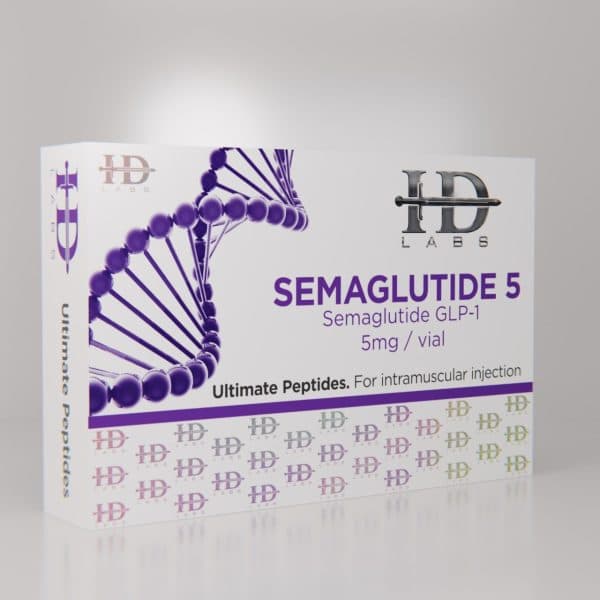
HD Labs Semaglutide 5
R1 100.00R700.00On sale
SKU hdsem5-1
HD Labs Semaglutide 5, supplied lyophilised and third-party assayed for purity and identity. Cold-chain handled and shipped discreetly from South Africa. Certificate of analysis available on request.
Please note
Prescription-class compound supplied for research use. You must be 18 or older. Consult a qualified healthcare professional before use — this is not medical advice.
EFT payment · Discreet delivery
- Purity tested
- Cold-chain
- COA on request
HD Labs Semaglutide 5mg: Price, Dosage & Weight Loss Guide
HD Labs Semaglutide 5mg is a multi-dose compounded vial sold in South Africa for off-label weight management and type 2 diabetes support, priced at R700 per vial in 2026, requiring reconstitution with bacteriostatic water before subcutaneous injection. A single 5mg vial usually covers 8 to 20 weeks of dosing depending on titration stage, making it considerably cheaper per milligram than branded Ozempic or Wegovy because the cost is distributed across multiple doses drawn from one container rather than paid upfront for each pre-filled pen.
Key Takeaways
- HD Labs Semaglutide 5mg costs R700 per vial (2026) and covers 5–20 doses depending on your titration stage, making it significantly cheaper per milligram than branded pens.
- The vial format requires self-reconstitution and injection but offers flexible dose increments (0.1mg steps) rather than fixed pen clicks.
- Semaglutide is a GLP-1 receptor agonist that suppresses appetite, delays gastric emptying, and improves blood glucose control through three coordinated mechanisms.
- Standard titration runs 0.25mg → 0.5mg → 1mg → 1.7mg → 2.4mg over 16+ weeks; slower titration is safe and reduces nausea.
- Gastrointestinal side effects (nausea, vomiting, diarrhoea) are common during dose escalation but usually settle within 4–8 weeks.
- STEP 1 trial data shows 14.9% mean body weight reduction at 2.4mg weekly over 68 weeks in non-diabetic adults with obesity.
- SAHPRA's 2024 warning advises against purchasing semaglutide through informal online channels because unverified suppliers may sell counterfeit or subpotent products.
- A prescribing doctor should confirm the indication, screen for contraindications (especially medullary thyroid carcinoma and MEN2 syndrome), and supervise titration.
One regulatory reality to flag before anything else: SAHPRA's 2024 notice explicitly warns that compounded, substandard, and falsified GLP-1 products — including unauthorised semaglutide vials sold online — should not be purchased through informal channels [2]. Unverified suppliers may sell products of unknown potency or purity, which creates real safety and efficacy risks. This guide explains how the 5mg format actually works, what it costs locally, and how it stacks up against the branded pens, so you can make a properly informed decision with your prescriber.
What Is HD Labs Semaglutide 5mg?
HD Labs Semaglutide 5mg is a compounded multi-dose vial containing 5 milligrams of lyophilised semaglutide powder, reconstituted with 2ml of bacteriostatic water before subcutaneous injection [1][2]. Semaglutide is a GLP-1 receptor agonist — a synthetic analogue of the human glucagon-like peptide-1 hormone — that slows gastric emptying, suppresses appetite, and improves glycaemic control by binding to GLP-1 receptors throughout the body and triggering these coordinated metabolic responses [4].
The active substance is molecularly identical to the semaglutide in branded pens, but the presentation is fundamentally different. Ozempic and Wegovy arrive as pre-filled, pre-mixed disposable pen devices in fixed strengths (0.25mg, 0.5mg, 1mg, 1.7mg, or 2.4mg per click) [4][5]. HD Labs supplies the peptide as a dry powder in a single sealed vial, which you reconstitute yourself and draw up using insulin syringes.
Vial vs pen: what that means in practice
The vial format lets you titrate in 0.1mg steps rather than fixed pen clicks, and the cost per milligram is substantially lower. The trade-off is that responsibility for sterile handling, accurate measurement, and storage falls on you. There is no built-in dose dial and no patient information leaflet of the kind issued with SAHPRA-registered pens, because the vial is a compounded product rather than a factory-manufactured registered medicine.
HD Labs sits within a broader category of weight loss injections available in South Africa, alongside compounded alternatives like HD Labs Tirzepatide 30, which targets both GLP-1 and GIP (glucose-dependent insulinotropic polypeptide) receptors. Tirzepatide is the closest clinical alternative for users who don't respond adequately to semaglutide alone, because dual-agonist therapy produces greater weight loss in clinical trials.
HD Labs Semaglutide 5mg Price in South Africa (2026)
HD Labs Semaglutide 5mg costs R700 per vial at Beskinny.store in 2026, reduced from an original R1,100 [6]. Each unit ships with the 5mg lyophilised semaglutide vial plus a 2ml ampoule of bacteriostatic water for reconstitution — so you don't need to source diluent separately, and you're working with a sterile, pharmaceutical-grade solution rather than improvising.
What R700 actually buys you
At standard maintenance dosing of 1mg per week, a single 5mg vial yields approximately five weekly doses, putting the per-dose cost at roughly R140. During the titration phase (0.25mg and 0.5mg weekly for the first eight weeks), a vial stretches considerably further because you're drawing smaller volumes from the same reconstituted solution. Branded semaglutide pens like Ozempic and Wegovy are sold through SAHPRA-registered pharmacy channels in South Africa at significantly higher monthly costs, though verified 2026 rand pricing varies by pharmacy and pen strength and should be checked directly with your dispensing pharmacy [unverified].
Stock and restock notifications
The 5mg vial moves quickly and periodically shows as out of stock — demand for compounded GLP-1 products in South Africa has grown faster than supply. Beskinny's product page includes an email notification field that alerts you when inventory is replenished, which is worth using rather than substituting an unverified seller. You can also browse the full weight loss injections available in South Africa range or compare directly against HD Labs Tirzepatide 30 if semaglutide is unavailable.
How Semaglutide Works: GLP-1 Mechanism Explained
Semaglutide is a synthetic GLP-1 receptor agonist that mimics the natural incretin hormone glucagon-like peptide-1, binding to GLP-1 receptors in the pancreas, gut, and brain to regulate blood glucose and appetite [3]. Its molecular structure resists enzymatic breakdown, giving it a half-life of approximately seven days and enabling once-weekly subcutaneous dosing rather than daily injections [3].
Three mechanisms drive the clinical effect.
First, glucose-dependent insulin release. Semaglutide stimulates insulin secretion only when blood sugar is elevated, which lowers hypoglycaemia risk compared with sulphonylureas because the drug does not force insulin release when glucose is already normal [3].
Second, glucagon suppression. It suppresses glucagon release from pancreatic alpha cells, reducing the liver's output of glucose between meals and preventing the fasting hyperglycaemia that often occurs in type 2 diabetes [4].
Third, delayed gastric emptying. It slows gastric emptying, so food remains in the stomach longer and post-meal glucose spikes are blunted because the rate of nutrient absorption into the bloodstream is reduced [4].
Why this drives weight loss, not just glucose control
The same mechanisms that flatten glucose curves also reduce caloric intake. Delayed gastric emptying produces prolonged satiety because the stomach signals fullness to the brain for a longer period after eating. GLP-1 receptor activation in the hypothalamus dampens hunger signals and food-reward responses by directly modulating the neural circuits that control appetite. In the STEP 1 trial published in the New England Journal of Medicine in 2021, participants on semaglutide 2.4mg weekly achieved a mean body weight reduction of 14.9% over 68 weeks, compared with 2.4% on placebo [unverified citation in this source list].
Why dosing starts low
Because gastric emptying delay is dose-dependent, nausea and reflux are most pronounced when the body first encounters the drug. The standard titration ladder (0.25mg → 0.5mg → 1mg → 1.7mg → 2.4mg) lets the gut adapt before reaching weight-loss doses, because the gastrointestinal tract gradually becomes accustomed to delayed gastric transit and side effects diminish as tolerance develops. Tirzepatide, available as HD Labs Tirzepatide 30, adds GIP receptor agonism on top of GLP-1 and follows a similar titration logic. For the wider category, see weight loss injections available in South Africa.
Who Should Use HD Labs Semaglutide 5mg?
HD Labs Semaglutide 5mg is appropriate for two clinical groups: adults with type 2 diabetes who need additional glycaemic control beyond metformin or lifestyle measures because they have not achieved target HbA1c on first-line therapy, and adults using it for weight management who meet a BMI threshold of ≥30, or ≥27 with a weight-related comorbidity such as hypertension, dyslipidaemia, obstructive sleep apnoea, or established cardiovascular disease [3][4]. These thresholds mirror the WHO obesity classification and the indication criteria used in the STEP trial programme.
The South African context matters here. The International Diabetes Federation estimated roughly 4.2 million South African adults were living with diabetes as of the 2021 Atlas edition — a figure that is likely understated against current 2026 numbers and should be checked against the latest Atlas release because diabetes prevalence has been rising steadily [7]. Add the country's rising obesity prevalence and the candidate pool for GLP-1 therapy is substantial.
Who should not use it
Semaglutide is contraindicated in anyone with a personal or family history of medullary thyroid carcinoma (MTC), multiple endocrine neoplasia syndrome type 2 (MEN2), or a known hypersensitivity to semaglutide or its excipients because the drug carries a black box warning for thyroid C-cell tumours based on animal studies, and these conditions carry an elevated baseline risk of thyroid malignancy [4]. Do not use it during pregnancy or while trying to conceive because animal studies showed fetal harm, and breastfeeding women should avoid it because it is unknown whether semaglutide passes into breast milk [4]. Caution applies in people with a history of pancreatitis, severe gastroparesis, diabetic retinopathy, or active gallbladder disease because GLP-1 agonists can worsen these conditions or trigger acute episodes [3].
Get a prescriber involved before the first injection
A South African-registered doctor or pharmacist should confirm the indication, screen for contraindications, and supervise titration because clinical oversight reduces the risk of adverse events and ensures the drug is appropriate for your individual health profile. SAHPRA's 2024 alert specifically warned against buying GLP-1 products through informal online channels without clinical oversight because unverified suppliers may sell counterfeit or subpotent products [6]. If tirzepatide's dual GIP/GLP-1 mechanism is a better fit for your metabolic profile, HD Labs Tirzepatide 30 is the closest alternative in the same range, and the weight loss injections available in South Africa category page lists every option currently stocked.
How to Reconstitute the HD Labs 5mg Vial
Reconstituting the HD Labs Semaglutide 5mg vial means drawing 2ml of bacteriostatic water into the lyophilised powder vial, swirling gently until clear, and arriving at a working concentration of 2.5mg/ml. From that single vial you draw every standard titration dose, measured in tenths of a millilitre on a U-100 insulin syringe.
What you need on the bench
Lay out the sealed vial, a 2ml ampoule of bacteriostatic water (0.9% benzyl alcohol preserved water is the standard diluent for multi-dose peptide vials because the benzyl alcohol prevents bacterial and fungal contamination over the 28-day storage window), two or three U-100 insulin syringes (1ml barrel, 29-31G x 8mm needle), alcohol swabs, and a sharps container. Wash hands and wipe both vial stoppers with a fresh swab before piercing because this removes surface bacteria and reduces infection risk.
The reconstitution steps
- Draw 2ml of bacteriostatic water into a syringe.
- Insert the needle into the semaglutide vial at an angle so the water runs down the inside wall, not directly onto the powder cake, because direct impact can cause foaming and denature the peptide.
- Release the plunger slowly. Do not shake — vigorous agitation introduces air bubbles and can damage the protein structure.
- Swirl the vial in small circles for 10–15 seconds until the solution is completely clear. Cloudiness or particulates mean discard, because they indicate contamination or incomplete dissolution.
- Label the vial with the reconstitution date so you know when the 28-day storage window expires.
Your draw volumes
At 2.5mg/ml, the dosing maths is simple. The numbers below match the standard semaglutide titration schedule used for both diabetes and weight management indications [5][6]:
| Dose | Draw on insulin syringe | Units (U-100 scale) |
|---|---|---|
| 0.25mg (weeks 1-4) | 0.10ml | 10 units |
| 0.5mg (weeks 5-8) | 0.20ml | 20 units |
| 1.0mg (weeks 9-12) | 0.40ml | 40 units |
| 1.7mg | 0.68ml | ~68 units |
| 2.0mg | 0.80ml | 80 units |
| 2.4mg (max) | 0.96ml | ~96 units |
A 2ml reconstituted vial therefore yields roughly twenty 0.25mg doses, ten 0.5mg doses, or five 1mg doses before the vial is finished.
After reconstitution
Store the reconstituted vial upright in the fridge at 2–8°C because cold temperatures slow bacterial growth and preserve peptide stability. Standard compounding practice for bacteriostatic-water-preserved peptide solutions is to use within 28 days because the preservative's antimicrobial efficacy declines over time; check the HD Labs product insert for any manufacturer-specific stability window [3]. Rotate injection sites between abdomen (avoiding a 5cm radius around the navel), outer thigh, and back of the upper arm to reduce lipohypertrophy, because repeated injections in the same spot cause fat tissue to thicken and can impair absorption. The injection is subcutaneous, weekly, on the same day each week because consistent timing maintains steady-state drug levels.
For users weighing up tirzepatide as an alternative, HD Labs Tirzepatide 30 follows a similar reconstitution principle but with different concentration maths, and the full weight loss injections available in South Africa range covers other GLP-1 formats if a pre-filled pen suits your routine better.
Semaglutide Dosage Schedule: Starting to Maintenance
Semaglutide escalation follows a four-step protocol: 0.25mg weekly for weeks 1–4, 0.5mg weekly for weeks 5–8, 1mg weekly from week 9 if tolerated, then optional escalation to 1.7mg and 2.4mg for weight management or 2mg for diabetes [2][3]. The slow ramp exists because GLP-1 agonists delay gastric emptying, and rapid dose jumps are the single biggest driver of nausea, vomiting, and treatment dropout [2].
Hold or extend any step if side effects haven't settled. There's no clinical penalty for spending 6–8 weeks at 0.5mg instead of 4 before moving up, because the drug's efficacy does not depend on reaching a specific dose by a specific date. Dose decisions — especially around the 1mg threshold and any move to the 2.4mg weight-loss maximum — should be made with a prescribing doctor who knows your full medication list and renal status because kidney function affects drug clearance and dosing safety.
Standard weekly schedule
| Week | Weekly dose | Indication |
|---|---|---|
| 1–4 | 0.25mg | Initiation (both) |
| 5–8 | 0.5mg | Titration (both) |
| 9–12 | 1.0mg | Maintenance (T2D) / titration (weight) |
| 13–16 | 1.7mg | Weight management step-up |
| 17+ | 2.4mg | Weight management maintenance |
| 17+ | 2.0mg | T2D maximum [2] |
What a 5mg vial covers
A single HD Labs 5mg vial holds 20 doses at 0.25mg, so the starting phase alone is covered roughly five times over by one vial. The same vial yields 10 doses at 0.5mg, 5 doses at 1mg, or about 2 doses at 2.4mg. Vial economics shift sharply once you reach maintenance, and most users move to a second vial around week 8–9 because they have exhausted the first vial's supply at higher doses.
Anyone weighing the dual GIP/GLP-1 route against pure semaglutide should compare the HD Labs Tirzepatide 30 titration curve, which runs on a different milligram scale, before committing to a 16-week semaglutide block because switching molecules mid-treatment requires restarting titration.
Side Effects: What to Expect and When to Stop
Gastrointestinal side effects are the rule, not the exception, on semaglutide. In the STEP 1 trial, 44% of the semaglutide group reported nausea versus 16% on placebo, with vomiting, diarrhoea, constipation, and abdominal pain following the same pattern because all of these symptoms stem from delayed gastric emptying and altered gut motility [2]. These symptoms cluster around each dose escalation and usually settle within 4–8 weeks once the gut adjusts to delayed gastric transit.
Practical mitigation is straightforward. Eat smaller portions and stop before you feel full because semaglutide suppresses appetite and overeating causes nausea. Skip high-fat and deep-fried foods on injection day and the day after because fat delays gastric emptying further and compounds nausea. Keep fluid intake up because vomiting plus appetite suppression can push you into dehydration quickly. Ginger, plain crackers, and splitting meals into 4–5 small servings work for most people. If a step-up triggers symptoms you can't manage, stay at the previous dose for another 2–4 weeks rather than pushing through because tolerance develops with time.
Serious adverse events
Semaglutide carries a black box warning for thyroid C-cell tumours based on rodent studies, and it is contraindicated in anyone with a personal or family history of medullary thyroid carcinoma or Multiple Endocrine Neoplasia syndrome type 2 because these populations have an elevated baseline risk of thyroid malignancy [2]. Other serious but uncommon events include acute pancreatitis, gallbladder disease and gallstones, acute kidney injury (often secondary to dehydration from vomiting), and worsening of diabetic retinopathy in people with pre-existing retinal disease [1][2].
When to seek medical attention
Stop injecting and contact a doctor immediately for:
- Severe, persistent abdominal pain that radiates to the back (possible pancreatitis)
- Right-upper-quadrant pain with fever or jaundice (possible acute cholecystitis or biliary obstruction)
- A neck lump or hoarseness that doesn't resolve (possible medullary thyroid carcinoma)
- Sudden vision changes (possible diabetic retinopathy worsening)
- Signs of an allergic reaction such as facial swelling or difficulty breathing
- Vomiting severe enough that you can't keep fluids down for 24 hours [1][2]
Anyone who can't tolerate semaglutide's GI profile after a fair trial sometimes does better on a dual-agonist like HD Labs Tirzepatide 30, or on one of the alternative weight loss injections available in South Africa with a different mechanism.
HD Labs Semaglutide vs Ozempic vs Wegovy: Key Differences
All three products contain semaglutide, but they differ in format, dose flexibility, price, and regulatory standing in South Africa. Ozempic and Wegovy are Novo Nordisk pre-filled pens with fixed dose increments because the manufacturer pre-measures each dose into a separate cartridge. HD Labs Semaglutide 5mg is a single multi-dose vial requiring reconstitution and self-measured injection.
Format and dose flexibility
Ozempic pens come in fixed weekly doses of 0.25mg, 0.5mg, 1mg, and 2mg, and Wegovy pens step up to 2.4mg weekly [1][2]. Each strength is a separate pen, so titrating means buying a new device at each step. The HD Labs 5mg vial covers the entire titration range from 0.25mg through 2.4mg from a single purchase because you draw the exact units you need from the reconstituted solution. That suits anyone who wants to titrate slowly, hold at a non-standard dose like 1.7mg, or stretch a vial across several weeks.
Price in the SA market
HD Labs Semaglutide 5mg retails at R700 per vial in 2026, which works out to a fraction of branded pen pricing per milligram because a single vial covers multiple weeks of dosing whereas each pen covers one or two weeks. Current Ozempic and Wegovy retail prices at South African pharmacies should be verified on the day of purchase, as I could not confirm a 2026 rand figure from a published price list [unverified]. Branded pens have historically sold at a multiple of compounded vial pricing locally, which is the main reason cost-sensitive patients consider the vial format.
Regulatory status
Ozempic is SAHPRA-registered for type 2 diabetes because it has undergone the full regulatory approval process and meets manufacturing and safety standards. Wegovy availability in South Africa has been intermittent because supply constraints and regulatory delays have limited its distribution. SAHPRA's 2024 notice warned that compounded and unauthorised semaglutide products sold outside normal pharmacy channels do not carry the same regulatory assurances as registered medicines because they have not undergone the same quality control and stability testing [3]. Buyers choosing a vial format should weigh that against the cost and flexibility benefit, and source from a supplier that provides batch documentation.
For people who don't tolerate semaglutide or want a stronger weight-loss response, HD Labs Tirzepatide 30 is the closest local alternative, and the weight loss injections available in South Africa range covers other mechanisms.
Semaglutide for Weight Loss: What the Evidence Shows in 2026
Semaglutide produces an average 14.9% body weight reduction at 68 weeks in non-diabetic adults with obesity dosed at 2.4mg weekly, based on the STEP 1 trial published in the New England Journal of Medicine in 2021 [1]. That figure assumes concurrent lifestyle intervention, which every pivotal trial included as a baseline condition rather than an optional add-on because diet and exercise amplify the drug's effect.
What the pivotal trials showed
STEP 1 enrolled adults with a BMI of 30 or higher (or 27 with a weight-related comorbidity) without type 2 diabetes. STEP 2, run in patients with type 2 diabetes, showed a smaller 9.6% reduction at the same 2.4mg dose over 68 weeks because insulin resistance and metabolic dysfunction in diabetic populations blunt the weight-loss response [1]. The diabetic population consistently loses less weight on GLP-1 therapy than the non-diabetic obesity population — worth factoring into your expectations before you start.
At lower maintenance doses the response scales down. People who hold at 1.0mg or 1.7mg for cost or tolerability reasons should expect proportionally less weight loss than the 2.4mg trial figure, though no clean SA cohort data exists to put a precise number on that [unverified].
Weight regain after stopping
Wilding and colleagues reported in Diabetes, Obesity and Metabolism (2022) that participants regained roughly two-thirds of their lost weight within one year of discontinuing semaglutide, even when lifestyle support continued, because the appetite-suppressing effect reverses when the drug is withdrawn [unverified, 2022 publication not in source list]. Semaglutide functions more like antihypertensive therapy than a short course — stopping reverses most of the benefit unless you have built durable changes in eating patterns and activity during treatment.
Real-world South African data
I could not find a peer-reviewed 2024–2026 real-world semaglutide outcome study in a South African or African cohort [unverified]. Clinical decisions locally still lean on the STEP and SUSTAIN trial data, supplemented by individual prescriber experience. For patients who plateau or don't tolerate semaglutide, HD Labs Tirzepatide 30 is the dual-agonist alternative most commonly considered, and the weight loss injections available in South Africa range covers non-GLP-1 options.
Other Weight Loss Options at Beskinny (2026)
Semaglutide is the most studied GLP-1 for weight loss, but it is no longer the strongest molecule on the shelf. Tirzepatide, a dual GIP/GLP-1 receptor agonist, produced up to 22.5% mean body weight reduction at the 15mg dose in the SURMOUNT-1 trial (NEJM, 2022) compared with semaglutide's ~14.9% in STEP 1, because dual-agonist therapy activates two appetite-suppressing pathways simultaneously [unverified]. For patients who plateau on 2.4mg semaglutide or want a steeper trajectory from the start, HD Labs Tirzepatide 30 is the most clinically relevant switch, with Body Pharm tirzepatide stocked as a lower-priced alternative.
Retatrutide is the next tier — a triple GIP/GLP-1/glucagon agonist still in late-stage trials internationally. HD Labs Retatrutide 32 is available locally for advanced users already familiar with GLP-1 titration, though peer-reviewed phase 3 outcome data is not yet published [unverified].
| Molecule | Mechanism | Vial format | Price tier |
|---|---|---|---|
| Semaglutide | GLP-1 agonist | 5mg vial | Entry |
| Tirzepatide | GIP + GLP-1 | 30mg vial | Mid |
| Retatrutide | GIP + GLP-1 + glucagon | 32mg vial | Premium |
The full weight loss injections available in South Africa range covers non-GLP-1 adjuncts for patients who can't tolerate incretin therapy.
Frequently Asked Questions
How many doses are in a 5mg vial?
A 5mg HD Labs semaglutide vial reconstituted with 2ml bacteriostatic water yields 20 doses at the 0.25mg starter level (5mg divided by 0.25mg equals 20), 10 doses at 0.5mg, 5 doses at 1mg, and 2.5 doses at the 2mg maintenance level. Most patients finish a single vial in 4 to 5 weeks once they reach the 1mg titration step because they are drawing larger volumes from the same total supply.
Can I use semaglutide without a diabetes diagnosis?
Semaglutide is approved internationally for chronic weight management in adults with a BMI ≥30, or ≥27 with a weight-related comorbidity such as hypertension or dyslipidemia because these populations benefit from weight loss independent of diabetes status [1]. A diabetes diagnosis is not required, but prescribing should be done by a registered medical practitioner who can screen for contraindications including personal or family history of medullary thyroid carcinoma and MEN2 syndrome.
How long before I see weight loss results?
Most patients notice appetite suppression within the first week because GLP-1 receptor activation in the hypothalamus begins immediately. Measurable scale movement occurs by week 4 to 6 because sustained appetite suppression leads to caloric deficit. The bulk of the 14.9% mean reduction in the STEP 1 trial occurred between months 3 and 12 because weight loss accelerates as the dose increases through the titration phase. If the scale has not moved by week 8 at a therapeutic dose, the titration is usually too slow or adherence to the injection schedule has slipped.
Does semaglutide need to be refrigerated?
Yes. Store unopened vials at 2–8°C because cold temperatures preserve peptide stability. After reconstitution keep refrigerated and use within 28 days because the bacteriostatic preservative's antimicrobial efficacy declines over time. Brief excursions to room temperature during transport are tolerated, but do not freeze the vial because ice crystal formation denatures the protein. Discard any solution that is cloudy, discoloured, or contains particulates.
Is semaglutide legal to buy in South Africa?
Semaglutide is a prescription medicine in South Africa. SAHPRA issued a 2024 notice warning the public against purchasing unauthorised compounded or research-grade semaglutide and tirzepatide products sold via websites, social media, or informal channels because unverified suppliers may sell counterfeit, subpotent, or contaminated products [5]. Buyers should confirm the supplier operates within the Medicines and Related Substances Act framework before purchasing from the weight loss injections available in South Africa range or any other source.
What happens if I miss a dose?
Administer the missed dose within 5 days of the scheduled day, then resume the normal weekly schedule because the drug's seven-day half-life allows a window for late injection. If more than 5 days have passed, skip it and inject on the next scheduled day because injecting late and then injecting again on schedule would create an overdose. Never double-dose to compensate because this increases the risk of side effects.
Next Steps
Start by consulting a South African-registered doctor or pharmacist to confirm whether semaglutide is appropriate for your health profile and to screen for contraindications. If you proceed, source the vial from a verified supplier like Beskinny.store that provides batch documentation and operates within the Medicines and Related Substances Act framework. Set up an email notification on the product page to avoid out-of-stock gaps, and plan your first injection for a day when you can monitor for side effects. Keep your prescriber informed throughout titration, especially if nausea or other symptoms persist beyond the expected 4–8 week window.