
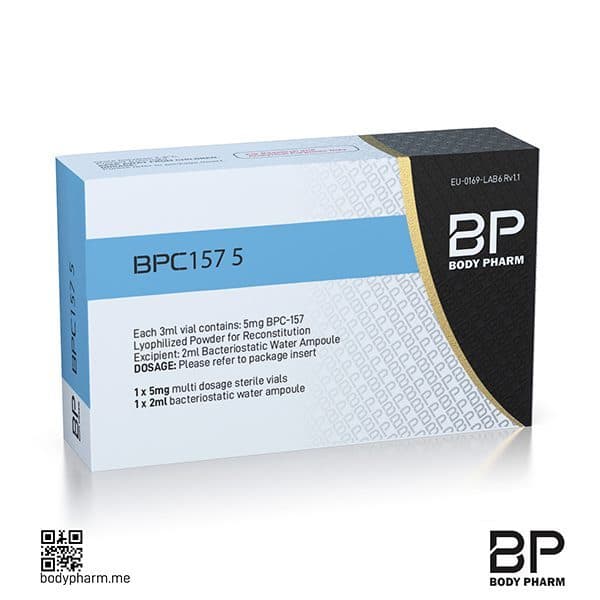
Body Pharm BPC 157 5
R390.00
SKU bpbpc5
BP BPC 157 5 mg, is a peptide with a growing reputation for its potential therapeutic benefits and limited side effects. Below, we explore the advantages, potential side effects, detailed dosage instructions, and half-life associated with BPC157.
EFT payment · Discreet delivery
- Purity tested
- Cold-chain
- COA on request
Body Pharm BPC-157 5mg: Benefits, Dosage & South Africa Guide
The Body Pharm BP BPC-157 5mg vial is a lyophilised pentadecapeptide sold in South Africa for research use, reconstituted with 1–2 mL bacteriostatic water and dosed subcutaneously at 250–500 mcg increments. As of 2026, BPC-157 remains unscheduled by SAHPRA but is treated as an unregistered experimental medicine under the Medicines and Related Substances Act 101 of 1965, and WADA has kept it on the S0 Prohibited List since 2022.
Key Takeaways
- BPC-157 is a 15-amino-acid synthetic peptide with no FDA, EMA, or SAHPRA approval; animal data dominates the evidence base as of 2026
- Reconstitute the 5mg vial with 2 mL bacteriostatic water to yield 2,500 mcg/mL, enabling precise 250–500 mcg research doses on a standard insulin syringe
- Subcutaneous injection into abdominal tissue is the standard research route; no head-to-head human trial comparing SC and IM exists
- BPC-157 is legal to buy in South Africa under research-use framing but carries WADA prohibition for competitive athletes
- Store lyophilised powder at -20 °C long-term or 2–8 °C short-term; reconstituted solution at 2–8 °C for up to 28 days
- Body Pharm BPC-157 5mg is available on Beskinny.store at R390 per vial; stacking with TB-500 or MOTS-C is common in research protocols
What Is BPC-157? The 60-Second Research Summary
BPC-157 is a synthetic 15-amino-acid pentadecapeptide derived from a protective protein fragment originally isolated from human gastric juice. The name stands for Body Protective Compound. It remains investigational as of 2026, with animal data dominating the literature and no approved human indication.
A few facts worth knowing before reconstituting a vial:
- Class: synthetic pentadecapeptide, sequence GEPPPGKPADDAGLV, INN bepecin.
- Origin: derived from a fragment of "body protection compound" identified in human gastric juice, which is why early research focused on gastrointestinal protection.
- Evidence base: a 2024 narrative review in PMC concluded BPC-157's musculoskeletal evidence remains overwhelmingly pre-clinical, with only weak early-phase human work available.
- Regulatory status: not approved by the FDA, EMA, or SAHPRA for any human indication, and on the WADA Prohibited List (S0) since 2022 as a non-approved substance.
- Use context in South Africa: sold "for research-use only / not for human therapeutic use" by suppliers such as Body Pharm, alongside related research peptides like Body Pharm TB-500 5mg and the Body Pharm MOTS-C 32 Pen.
Every benefit discussed below is a research-context observation, not a medical claim.
Body Pharm BP BPC-157 5mg: What's in the Vial
The Body Pharm BP BPC-157 5mg vial contains 5 milligrams of lyophilised (freeze-dried) synthetic bepecin pentadecapeptide as a dry white powder. It sells for R390 per vial on Beskinny.store (2026). Lyophilisation removes water under vacuum, leaving a stable solid that must be reconstituted with bacteriostatic water before any research application — this extends shelf life considerably compared to liquid formulations.
Body Pharm (often abbreviated BP on the label) is a South African research-peptide brand. Its catalogue includes the Body Pharm TB-500 5mg, commonly paired with BPC-157 in tissue-repair research, and the Body Pharm MOTS-C 32 Pen for mitochondrial research protocols. The 5mg per vial format is the standard South African research-format size, matching what peptides.co.za and similar local suppliers list as the default unit (2026).
Not the same as Amazon "peptide" supplements
Amazon (2026) listings for "Peptide Recovery Complex," "BPC Recovery" capsules, and collagen-peptide blends are not equivalent to a BPC-157 5mg peptide vial. Those oral supplements typically contain hydrolysed collagen fragments or BPC-157-adjacent amino acids in powder or capsule form, not the intact 15-amino-acid GEPPPGKPADDAGLV sequence (INN bepecin). Intact peptides are broken down by stomach acid during digestion. A lyophilised research vial is the only format that delivers the actual pentadecapeptide for reconstitution-based study. Confirm storage temperature and expiry from the printed label and outer carton rather than relying on generic peptide-storage guidance.
BPC-157 Research Benefits: What Animal Studies Show (2024–2026)
BPC-157's reported benefits fall into four mechanistic categories, all derived from animal and in vitro models with no FDA, EMA, or SAHPRA-approved human indication as of 2026. A 2024 narrative review in PMC concluded the evidence base remains overwhelmingly pre-clinical, with no adequately powered human RCT for tissue healing or performance outcomes published through 2026.
Tissue healing and regeneration (animal models only). Rat studies dating back to the 1990s and summarised on Examine.com (2023) report accelerated repair across muscle, tendon, ligament, bone, and skin in surgical and toxic-trauma models. The likely mechanism is upregulation of growth factors including VEGF and FGF. Vendor pages like peptides.co.za (2026) describe "demonstrated promotion of healing across skin, muscle, and bone tissues," but that claim is vendor-sourced and not backed by peer-reviewed human data. This mechanism drives most stacking research alongside the Body Pharm TB-500 5mg vial.
Anti-inflammatory properties (animal). Rodent work indicates BPC-157 modulates nitric oxide synthesis and downregulates pro-inflammatory cytokines after injury, reducing oedema in acute-injury models. No human RCT confirms clinical anti-inflammatory efficacy as of 2026.
Gastrointestinal health and gut lining repair (animal, two registered human pilots). BPC-157 was originally isolated from human gastric juice. Rat models show protection against NSAID-induced ulcers and colitis through enhanced mucus production and epithelial tight-junction integrity. Two small oral BPC-157 inflammatory bowel disease trials are registered on ClinicalTrials.gov (2023–2026) but have not yet reported published outcomes.
Angiogenesis and blood flow (animal). BPC-157 promotes VEGF expression and capillary formation in rat ischaemia models. This is the proposed mechanism behind faster repair in poorly vascularised tissue like tendon and ligament. Human angiographic confirmation does not exist in the 2024–2026 literature.
Innerbody (January 2026) frames the practical reality plainly: BPC-157 "may suit adults seeking relief from musculoskeletal pain, joint concerns, and digestive issues" but is "not an FDA-approved indication." WADA has kept BPC-157 on the S0 Prohibited List through the 2024–2025 updates, so any competitive athlete should treat it as a banned substance regardless of research framing. Researchers building a wider peptide catalogue can find mitochondrial-endpoint coverage — which doesn't overlap with BPC-157's tissue-repair mechanism — in the Body Pharm MOTS-C 32 Pen.
How to Reconstitute Body Pharm BPC-157 5mg: Step-by-Step
Reconstituting a 5mg BPC-157 vial requires bacteriostatic water, a U-100 insulin syringe, alcohol swabs, and the sealed vial. Adding 2 mL of bacteriostatic water yields a 2,500 mcg/mL concentration that makes 250–500 mcg research draws easy to measure on a standard U-100 insulin syringe. The larger volume reduces measurement error compared to a 1 mL reconstitution. These instructions are framed for research-use calculations only and do not substitute for a product insert or clinician oversight.
What you need on the bench
- One Body Pharm BP BPC-157 5mg lyophilised vial
- Bacteriostatic water (0.9% benzyl alcohol), 1–2 mL
- U-100 insulin syringes (29–31G, 0.5 mL barrel preferred)
- Two alcohol swabs per session
- A permanent marker for labelling
- A 3 mL syringe for transferring the solvent
The concentration math
The choice of solvent volume sets every subsequent dose calculation. Adding 1 mL gives 5,000 mcg/mL, which compresses a 250 mcg dose into just 0.05 mL (5 IU on a U-100 syringe). That is accurate, but unforgiving if the plunger overshoots. Adding 2 mL gives 2,500 mcg/mL and doubles the measurement margin, which is why most peptide calculators recommend 2 mL for 5mg vials.
| Recon volume | Concentration | 250 mcg draw | 500 mcg draw |
|---|---|---|---|
| 1 mL bac water | 5,000 mcg/mL | 0.05 mL (5 IU) | 0.10 mL (10 IU) |
| 2 mL bac water | 2,500 mcg/mL | 0.10 mL (10 IU) | 0.20 mL (20 IU) |
Formula: Dose (mcg) ÷ Concentration (mcg/mL) = Volume to draw (mL).
Step-by-step procedure
- Wipe the septum. Swab the rubber stopper of both the BPC-157 vial and the bacteriostatic water vial with a fresh alcohol pad and let it air-dry for 30 seconds. This allows the alcohol to kill surface bacteria.
- Draw your solvent. Pull 2 mL of bacteriostatic water into a 3 mL syringe (the insulin syringes are for dosing, not reconstitution).
- Inject slowly down the vial wall. Angle the needle so the stream runs against the inner glass rather than blasting directly onto the lyophilised powder. This prevents foaming and peptide shearing.
- Swirl, do not shake. Rotate the vial gently between your fingers until the powder fully dissolves into a clear solution. Shaking can shear the peptide chain and reduce bioactivity.
- Label immediately. Write the reconstitution date, concentration (e.g. "December 3, 2026 — 2,500 mcg/mL"), and expected discard date on the vial.
- Refrigerate at 2–8 °C unless your specific vial label states otherwise. Verify expiry on the carton rather than relying on generic peptide storage rules.
Researchers stacking the Body Pharm TB-500 5mg typically reconstitute both vials on the same day using identical 2 mL volumes to keep dosing arithmetic consistent across the protocol.
BPC-157 Dosage Instructions: Research Protocols in 2026
The most-cited community research range for the BPC-157 5mg peptide is 250–500 mcg per day, split into one or two subcutaneous injections, run for 4–12 weeks followed by a rest period of equal or shorter length. These figures are anecdotal, drawn from forums, vendor guides, and practitioner write-ups — not from registered clinical trials. No standardised human protocol exists in peer-reviewed literature.
A March 2026 practitioner-level dosage guide published by drrogerscenters.com signals growing clinical interest, but the underlying evidence base remains overwhelmingly pre-clinical. Any researcher applying these numbers to themselves should consult a qualified healthcare provider first.
Typical community-derived protocol
- Daily dose: 250–500 mcg, with 250 mcg as a common starting point to minimise any potential adverse response and 500 mcg the upper end for acute soft-tissue research.
- Frequency: Once daily for systemic protocols. Split into 2x daily (morning and evening) when researchers target acute recovery windows, based on the assumption that more frequent dosing maintains higher tissue concentrations.
- Duration: 4–6 weeks for short cycles, up to 12 weeks for extended musculoskeletal research, followed by a 4-week washout.
- Timing: Subcutaneous administration into abdominal tissue for systemic effect. Some protocols site the injection close to the area of interest, though human pharmacokinetic data supporting site-proximal dosing is absent.
- Stacking: Researchers pairing BPC-157 with Body Pharm TB-500 5mg typically dose both at the same time of day to simplify logging. Both target tissue repair through complementary mechanisms.
- Logging: Record dose, route, site, and any observed response per session. Vendor protocols vary too widely for retrospective reconstruction.
What the evidence does and doesn't say
BPC-157 is on the WADA Prohibited List (S0) and remains unapproved by the FDA, EMA, and SAHPRA as of 2026. A 2024 narrative review concluded that robust efficacy data in humans does not yet exist. Treat every milligram figure above as a research starting point, not a prescription.
Subcutaneous vs Intramuscular: Which Injection Route for BPC-157?
Subcutaneous (SC) injection into abdominal fat is the default route most researchers use for the BPC-157 5mg peptide, while intramuscular (IM) administration is reserved for cases where the research interest is a specific muscle or tendon site. No peer-reviewed human RCT has compared SC and IM administration of BPC-157 head-to-head as of 2026, so route choice remains researcher-driven rather than evidence-mandated.
The two routes at a glance
| Factor | Subcutaneous (SC) | Intramuscular (IM) |
|---|---|---|
| Standard site | Lower abdomen, outer thigh | Deltoid, vastus lateralis |
| Needle | 29–31G, 8 mm (U-100 insulin syringe) | 23–25G, 16–25 mm |
| Insertion angle | 45–90°, pinch skin fold | 90°, no pinch |
| Aspirate? | Brief check | Yes, confirm no vascular hit |
| Learning curve | Low | Moderate |
Site-proximal IM injection (placing the shot near a specific tendon or muscle lesion) appears in some protocols, but pharmacokinetic rationale for this in humans is unestablished. Both routes require site rotation to avoid lipohypertrophy (SC) or scar tissue (IM).
Practical decision for self-administering researchers
SC wins on lower needle gauge, less bruising, and a flatter learning curve. Researchers stacking BPC-157 with Body Pharm TB-500 5mg almost universally use SC for both, since TB-500's longer half-life makes injection-route variability irrelevant. Pen-style delivery, as used with the Body Pharm MOTS-C 32 Pen, is SC-only by design.
This is research-use guidance, not medical advice. Anyone administering peptides to themselves should consult a qualified clinician first.
Storage Requirements: Keeping BPC-157 Potent
Lyophilised BPC-157 powder stores best at -20 °C for up to 24 months, while reconstituted solution must be kept at 2–8 °C and used within 28 days. Peptide bonds degrade faster at higher temperatures, which is why the cold-chain benchmarks matter. The Body Pharm BP BPC-157 5mg vial label and outer carton override any generic rule.
Unreconstituted (lyophilised powder)
Keep the sealed vial in a freezer at -20 °C for long-term storage, or in a household fridge at 2–8 °C if you'll use it within a few weeks. Three practical constraints:
- Avoid repeated freeze-thaw cycles. Each cycle introduces moisture and degrades the peptide chain through ice-crystal formation.
- Keep the vial away from direct light. The amber glass or carton protects against photodegradation.
- Don't store it on the freezer door, where temperature swings are largest and freeze-thaw risk is highest.
Reconstituted (mixed with bacteriostatic water)
Once you add bacteriostatic water, the vial lives at 2–8 °C only. Do not freeze reconstituted solution; ice crystal formation shears the peptide. Write the reconstitution date and final concentration (for example, "December 3, 2026 — 2,500 mcg/mL") directly on the vial with a fine marker.
For twice-daily protocols, draw all doses for the day into separate insulin syringes at once, cap them, and refrigerate. This cuts vial punctures from 14 to 1 per week and reduces contamination risk. Researchers running a Body Pharm TB-500 5mg stack alongside BPC-157 can apply the same pre-draw method, while the Body Pharm MOTS-C 32 Pen handles storage internally once primed.
One more thing: degraded peptide doesn't always look different. Cloudiness or visible particulate is a discard signal, but clarity isn't proof of potency.
BPC-157 Side Effects: What Research Reports
BPC-157 is reported as well-tolerated in animal models, with no serious adverse events documented in pre-clinical literature, but the human side-effect profile remains unestablished as of 2026. That gap matters more than any list of mild symptoms.
In rodent and in vitro work summarised by a 2024 narrative review in PMC, researchers observed no significant toxicity at standard experimental doses. Anecdotal human reports collected by clinician-led evidence reviews in 2024 mention three recurring observations: transient nausea (usually tied to the injection itself rather than a systemic effect), mild dizziness in the hour after administration, and injection-site irritation including redness or a small wheal. None of these have been quantified in a controlled human trial.
The honest caveat buyers need
No adequately powered human RCT for BPC-157 has been completed and published as of 2026. A 2024 phase 1 safety signal and a roughly 12-participant intra-articular knee study are the only human data points, and both are methodologically weak. Anything written about "common side effects" in humans is extrapolation from animal data plus user reports, not established pharmacovigilance.
Long-term safety — including theoretical concerns around angiogenesis and unmonitored tissue growth — has not been studied in humans over multi-year horizons. Consult a healthcare provider familiar with experimental peptides before use, particularly if you have a personal or family history of cancer, are pregnant, or are running a stack such as Body Pharm TB-500 5mg or the Body Pharm MOTS-C 32 Pen where interaction data is effectively zero.
Is BPC-157 Legal to Buy in South Africa in 2026?
BPC-157 is legal to buy in South Africa in 2026 for research purposes only. It is not a registered medicine and has no approved human therapeutic use under SAHPRA (the South African Health Products Regulatory Authority). It sits in a regulatory grey zone: not explicitly scheduled under the Medicines and Related Substances Act 101 of 1965, yet functionally treated as an unregistered, prescription-only experimental substance when sold or used with therapeutic claims.
The practical legal picture for a South African buyer evaluating the Body Pharm BP BPC-157 5mg vial:
- Regulator — SAHPRA governs medicines, scheduling, and Section 21 unregistered-medicine authorisations.
- Scheduling status — No 2024–2026 gazette notice lists "BPC-157," "Body Protection Compound 157," or the INN "bepecin" as a scheduled substance, so it has no schedule line item of its own.
- Sale framing — Vendors including peptides.co.za and Beskinny.store supply BPC-157 5mg labelled "for research-use only / not for human therapeutic use," mirroring UK research-use framing used by suppliers like XL Peptides. This allows them to avoid Medicines Act marketing rules that would otherwise require product registration.
- Use as a medicine — Clinics administering BPC-157 to patients typically rely on off-label or Section 21-type justifications, because no registered BPC-157 product exists in South Africa as of 2026.
- WADA status — BPC-157 has been on the WADA Prohibited List (S0, non-approved substances) since 2022 and remains there in the 2024–2025 updates, so competitive athletes face sanction risk regardless of SA civilian legality.
- Change risk — SAHPRA can gazette new scheduling without wide notice. Verify current status before each purchase.
Where Body Pharm BP fits
Beskinny.store stocks the Body Pharm BP BPC-157 5mg vial within South Africa under research-use terms, alongside Body Pharm TB-500 5mg and the Body Pharm MOTS-C 32 Pen. This article is not legal advice. Consult a regulatory specialist or pharmacist for case-specific guidance before importing, selling, or administering BPC-157.
BPC-157 vs TB-500: Should You Stack or Choose One?
BPC-157 and TB-500 are two distinct research peptides with overlapping tissue-repair mechanisms, which is why community protocols often run them together rather than choosing one. BPC-157 is a synthetic 15-amino-acid pentadecapeptide derived from a sequence in human gastric juice, with the bulk of its pre-clinical literature focused on localised soft-tissue healing and gastrointestinal integrity. TB-500 (Thymosin Beta-4 fragment) is a synthetic fragment of Thymosin Beta-4, a 43-amino-acid peptide researched for systemic actin regulation, cell migration, and inflammation modulation.
Why researchers pair them
The stacking rationale is mechanistic: BPC-157 is studied for angiogenesis and growth-factor signalling at the injury site, while TB-500 is studied for cell migration and systemic anti-inflammatory effects. Typical community stacking protocols pair BPC-157 at 250–500 mcg/day subcutaneously with TB-500 at 2–2.5 mg twice weekly, but these numbers come from forum and coaching write-ups, not registered trials.
The honest data gap
No adequately powered human RCT has been published for BPC-157, TB-500, or the combination as of 2026. The BPC-157 evidence base remains overwhelmingly pre-clinical, and TB-500's human data is thinner still. Both sit on the WADA Prohibited List (S0), so competitive athletes carry sanction risk on either compound alone or stacked.
If you're sourcing both within South Africa, Beskinny stocks the Body Pharm TB-500 5mg vial under the same research-use framing as the BPC-157 5mg.
Where to Buy Body Pharm BPC-157 5mg in South Africa
Beskinny.store stocks the Body Pharm BP BPC-157 5mg vial at R390 per unit, with 15 vials in stock at the time of writing (November 2026). The listing is sold strictly for research purposes, and the site positions itself as a premium peptide and weight-loss injection supplier servicing South African researchers and clinicians.
Body Pharm is the manufacturer behind the vial, and the same brand appears across Beskinny's catalogue for buyers building out a broader research kit:
- Body Pharm BPC-157 5mg — R390, the product covered in this guide.
- Body Pharm TB-500 5mg — the common stacking companion discussed earlier.
- Body Pharm MOTS-C 32 Pen — mitochondrial-derived peptide in pen format.
- Body Pharm Somatropin 40 Pen — recombinant GH research pen.
- Body Pharm Tirzepatide 30 Pen — listed under the broader weight-loss injections category.
Order the Body Pharm BPC-157 5mg vial
Purchase the Body Pharm BP BPC-157 5mg vial on Beskinny.store at R390. Confirm the batch and expiry printed on the vial on arrival, and consult a registered healthcare provider before any use beyond bench research. BPC-157 remains unregistered with SAHPRA as of 2026, so the product is supplied under research-use framing rather than as a therapeutic medicine.
Frequently Asked Questions: BPC-157 5mg
How many doses are in a 5mg BPC-157 vial? A 5mg BPC-157 vial reconstituted with 2 mL of bacteriostatic water yields 2,500 mcg/mL, which gives 20 doses at 250 mcg (0.1 mL) or 10 doses at 500 mcg (0.2 mL) for research-use calculations. Adjust the math to your actual solvent volume and protocol.
Can BPC-157 be taken orally instead of injected? Oral BPC-157 retains some activity in animal models because some peptide fragments survive gastric acid. The two registered human trials on ClinicalTrials.gov (2023–2026) target inflammatory bowel disease via oral dosing. Subcutaneous and intramuscular injection remain the standard routes in research protocols because systemic bioavailability data for the oral route in humans is not yet published.
How long before BPC-157 shows effects in research models? Pre-clinical rodent studies report tissue-healing signals within 7–14 days of daily dosing, likely because peptide accumulation in target tissues reaches effective concentrations within that window. A 2024 narrative review in PMC confirms the evidence base remains overwhelmingly pre-clinical with no adequately powered human RCT establishing an onset window. Human timelines are anecdotal and not validated.
Does BPC-157 need to be refrigerated? Reconstituted BPC-157 is typically stored at 2–8 °C because peptides in solution degrade faster at room temperature through hydrolysis and oxidation. Lyophilised (unmixed) vials are often stable at room temperature short-term, but follow the exact range printed on your Body Pharm vial and outer carton rather than generic guidance.
Is BPC-157 the same as the Amazon peptide recovery supplements? No. Most "BPC-157" capsules and sprays sold on Amazon (2026) are unregulated supplements that the FDA has flagged as not permitted in compounded drugs or dietary supplements because they lack the intact 15-amino-acid sequence. The Body Pharm BP BPC-157 5mg vial is a lyophilised research peptide, not a finished consumer supplement, and pairs naturally with Body Pharm TB-500 5mg or Body Pharm MOTS-C 32 Pen in research kits.
What needle size is used for BPC-157 subcutaneous injection? A 29–31 gauge U-100 insulin syringe (5/16" to 1/2", 0.3–0.5 mL capacity) is the standard format for subcutaneous BPC-157 administration in research settings. It minimises tissue trauma and matches the small injection volumes produced by a 2 mL reconstitution.
Can I bring BPC-157 through South African customs? Personal importation of unregistered medicines requires SAHPRA Section 21 authorisation in principle. Research-use peptides sit in a grey zone, and customs seizures have been reported in 2024–2025. Verify status with a regulatory specialist before importing.
