
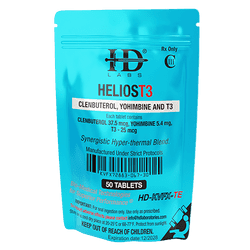
HD Labs Helios T3
R200.00
SKU hdcyt3
HD Labs Helios T3 is an oral fat-loss tablet that stacks three pharmacologically active drugs — clenbuterol hydrochloride, yohimbine hydrochloride and triiodothyronine (T3). These are potent, doping-controlled substances, not gentle supplements. Supplied for research and educational purposes only.
Please note
Prescription-class compound supplied for research use. You must be 18 or older. Consult a qualified healthcare professional before use, this is not medical advice.
Card · EFT · Bitcoin · Discreet delivery
HD Labs Helios T3: Clenbuterol, Yohimbine & T3 Fat-Loss Tablets
HD Labs Helios T3 is a pack of 50 oral tablets that combines three well-known thermogenic and lipolytic agents in one pill: clenbuterol hydrochloride, yohimbine hydrochloride and triiodothyronine (T3). It borrows its name from the classic injectable “Helios” clenbuterol/yohimbine blend, but delivers that stack — plus the thyroid hormone T3 — in tablet form. Make no mistake about what this is: three real drugs, each with a well-documented pharmacology and safety profile, not a supplement. Two of the three push the cardiovascular system hard, and the honest evidence picture for fat loss is far more mixed than the “triple fat-burner” framing suggests.
What you’ll learn in this article:
- What each of the three actives actually does — the real receptor mechanisms behind clenbuterol, yohimbine and T3.
- What the human evidence supports for fat loss, and where it stops (including why the T3 label warns against exactly this use).
- The stacked safety profile, the doping and regulatory position for a South African buyer, and who should not touch this stack.
Key Takeaways
- What it is: 50 oral tablets combining clenbuterol HCl, yohimbine HCl and triiodothyronine (T3) — three active drugs, not a dietary supplement.
- Clenbuterol: a beta-2 adrenergic agonist that is not approved for human use and has no evidence of fat-loss efficacy in people.
- Yohimbine: an alpha-2 adrenergic antagonist with a measurable fat-mobilising effect in healthy volunteers, but it is no longer an approved medicine.
- T3: the active thyroid hormone; its regulatory label carries a boxed warning that thyroid hormone should not be used for weight loss.
- Safety: clenbuterol and T3 both strain the heart — T3 overtreatment can trigger tachycardia, arrhythmias, angina and atrial fibrillation. Not for anyone with a cardiac, thyroid, blood-pressure or anxiety condition.
- Athletes: clenbuterol is prohibited at all times on the WADA Prohibited List, with no permitted threshold.
What Is HD Labs Helios T3?
HD Labs Helios T3 is an HD Labs–branded oral fat-loss product: 50 tablets, each combining clenbuterol hydrochloride, yohimbine hydrochloride and triiodothyronine (T3). It sits in the weight-loss tablets range and is a tablet reworking of the injectable “Helios” concept, which traditionally pairs clenbuterol with yohimbine; the T3 is the extra thyroid-hormone component that gives this version its name.
- Format: 50 oral tablets per pack.
- Actives: clenbuterol hydrochloride + yohimbine hydrochloride + triiodothyronine (T3).
- Brand: HD Labs (see the rest of the HD Labs range).
An important honesty note before anything else: no manufacturer certificate of analysis or independent assay is supplied with this product, so the exact per-tablet amount of each active cannot be verified here. Because the three ingredients have very different safe-dose ranges — a few micrograms for T3, versus milligram quantities for yohimbine — that unknown matters, and it is one reason a fixed-combination tablet is harder to dose safely than the individual compounds.
Three Actives, Three Mechanisms
The “triple action” marketing is loosely true — the three drugs do act through different pathways — but each mechanism comes with a caveat the sales copy leaves out.
Clenbuterol is a long-acting beta-2 adrenergic agonist, the same drug class as asthma relievers. Beta-2 stimulation modestly raises metabolic rate and has a mild thermogenic effect, which is the rationale for its use in fat-loss stacks. The catch is decisive: clenbuterol is not approved for human use and is taken off-label by bodybuilders for presumed lipolytic effects for which there is no evidence of efficacy in humans. Its human reputation rests on anecdote, not controlled data.
Yohimbine is an alpha-2 adrenergic antagonist. Fat cells carry alpha-2 receptors that normally restrain the breakdown of stored fat; by blocking them, oral yohimbine has shown a real, measurable lipid-mobilising effect in healthy male volunteers. That is the best-evidenced of the three claims here — but yohimbine is no longer an approved prescription medicine, and the fat-loss effect is modest, not transformative.
Triiodothyronine (T3) is the biologically active thyroid hormone. It enhances oxygen consumption and raises the basal metabolic rate and the metabolism of carbohydrates, lipids and proteins, which is why it is added to aggressive cutting stacks. But its own regulatory label is blunt: a boxed warning states that thyroid hormones should not be used for the treatment of obesity or for weight loss. Using T3 to strip fat is off-label, and in people with normal thyroid function the doses needed to force weight loss are the same doses that cause toxicity.
What the Evidence Shows for Fat Loss
Stripped of the hype, the three actives sit on very different evidence tiers:
- Yohimbine has the strongest support — controlled human data showing it increases fat mobilisation, particularly around exercise. The effect is genuine but modest.
- Clenbuterol has essentially no human evidence of fat-loss efficacy; its use in people is off-label and unproven.
- T3 will accelerate metabolism, but it does so by pushing the whole body into a hyperthyroid-like state, and the label explicitly warns against using it for weight loss because the weight lost is not selectively fat and the cardiac risk is real.
A reasonable buyer objection: “People clearly lose weight on this — doesn’t that prove it works?” Weight can come off on a strong stimulant-plus-thyroid stack, but some of that is water and lean tissue, not just fat, and it comes with a cardiovascular cost. “It causes weight loss” and “it is a safe or proven fat-loss drug” are not the same claim.
Know the Risks Before You Dose
This is the part the original marketing skips. Two of the three actives are direct cardiovascular stressors, and stacking them multiplies the load.
- Clenbuterol (beta-2 stimulation) commonly causes tremor, palpitations, tachycardia, headache and low blood potassium. Overdose and misuse have caused serious cardiac events.
- T3 (thyroid overtreatment) can precipitate increased heart rate, arrhythmias, angina, myocardial infarction and atrial fibrillation, especially in older users or anyone with existing heart disease, in whom the label says dosing must start well below full replacement.
- Yohimbine adds sympathetic drive and has been linked to occasional severe adverse events, including anxiety, raised blood pressure and a faster heart rate.
Practical implications: do not combine this with other stimulants (caffeine at high doses, ephedrine, other beta-agonists), and steer clear entirely if you have any cardiac, thyroid, hypertensive or anxiety condition, or if you are pregnant or breastfeeding. Because it is a fixed-dose tablet, you cannot titrate one active without also raising the others — a real drawback compared with dosing the compounds separately.
Athletes: This Is a Banned Stack
If you compete in tested sport, note that clenbuterol is prohibited at all times — both in and out of competition — on the WADA Prohibited List, with no threshold below which it is permitted. Even trace exposure can produce an adverse analytical finding. A single Helios T3 tablet would put a tested athlete in breach.
Why Buy HD Labs Helios T3 from Beskinny?
HD Labs Helios T3 is stocked at Beskinny at R200 per pack of 50 tablets, shipped from a South African warehouse.
- Product spec: 50 oral tablets combining clenbuterol HCl, yohimbine HCl and T3, HD Labs branded.
- Current stock: see the live count on the product page, which is the source of truth for price and availability.
- Why Beskinny: a dedicated South African peptide and fat-loss retailer with a narrow, fast-turnover range rather than a general supplement shop.
Check live stock and pricing for HD Labs Helios T3 on the Beskinny product page — and discuss it with a registered SA practitioner before use.
Frequently Asked Questions
What is in HD Labs Helios T3?
Each pack holds 50 tablets combining three active drugs: clenbuterol hydrochloride (a beta-2 adrenergic agonist), yohimbine hydrochloride (an alpha-2 adrenergic antagonist) and triiodothyronine (T3, the active thyroid hormone). These are pharmacologically active drugs, not supplement ingredients.
Does it actually burn fat?
The evidence is mixed. Yohimbine has controlled human data showing a modest fat-mobilising effect; clenbuterol has no proven fat-loss efficacy in humans; and T3 accelerates metabolism but its label warns against using thyroid hormone for weight loss.
Is it safe?
It carries real cardiovascular risk. T3 overtreatment can cause tachycardia, arrhythmias, angina and atrial fibrillation, and clenbuterol commonly causes tremor, palpitations and low potassium. It should not be used by anyone with a cardiac, thyroid, blood-pressure or anxiety condition.
Will it fail a drug test?
Yes for tested athletes. Clenbuterol is prohibited at all times on the WADA Prohibited List with no permitted threshold.