
Energy & metabolism
Peptides for Energy
MOTS-c, NAD+ and BPC-157, peptides associated with energy, metabolism and recovery. Clean, third-party tested.
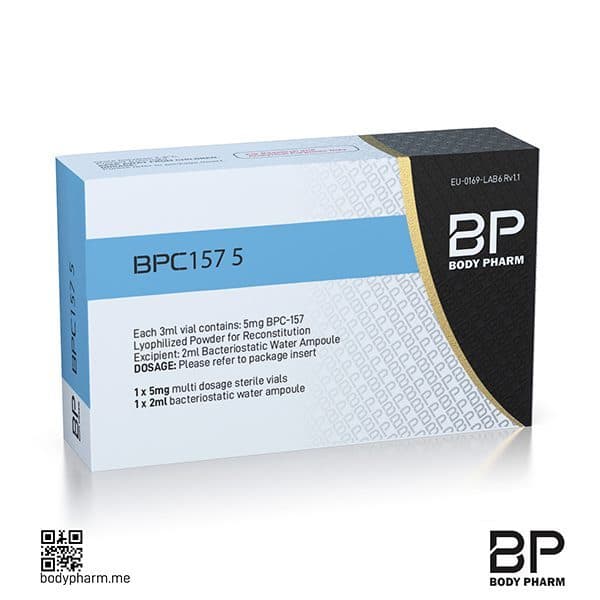
Body Pharm BPC 157 5 Vial
R390.00

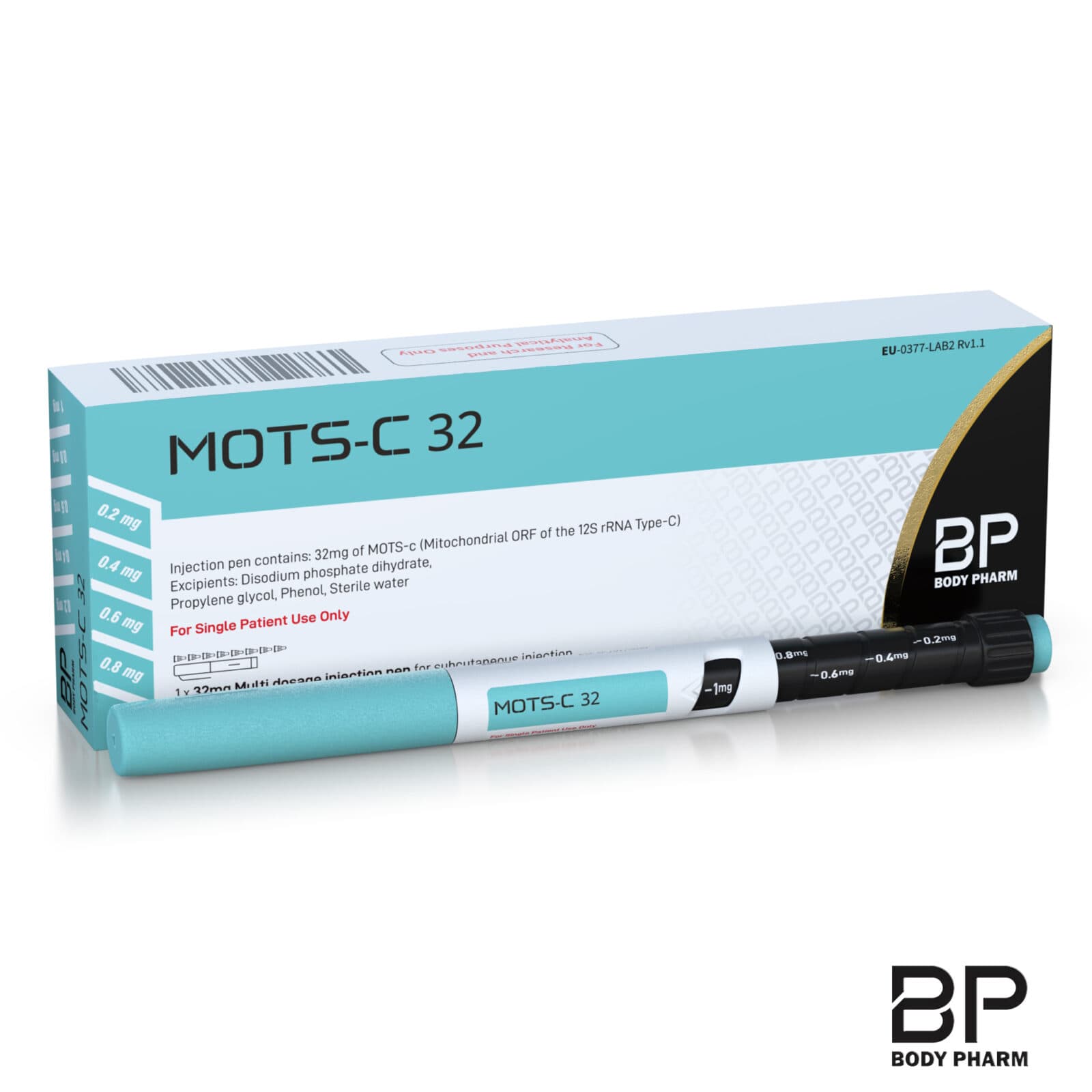
Body Pharm MOTS-C 32 Pen
R2 200.00
Key Takeaways
- Only NAD⁺ precursors (NMN and NR) have published human randomised controlled trials touching physical-performance and fatigue endpoints; the injectable peptides on this page lack that evidence tier.
- Every popular energy peptide sold locally—BPC-157, TB-500, CJC-1295, Ipamorelin, MOTS-c, Semax—is prohibited by WADA under S0/S2, and treated by the FDA as an unapproved new drug.
- For SASCOC-registered athletes, all six peptides are off-limits under strict-liability anti-doping rules.
- NAD⁺ precursors are not peptides but nucleotides; they sit outside WADA prohibition and carry the strongest human evidence for mitochondrial energy support—though even there the effects are modest and uneven.
The most evidence-backed compounds for energy in 2026 aren't peptides at all. They're NAD⁺ precursors like NMN and NR, which have human randomised controlled trials (RCTs) reporting improved walk-test distance and physical performance. Every popular "energy peptide" sold locally—BPC-157, TB-500, CJC-1295, Ipamorelin, MOTS-c, Semax—is prohibited by WADA under S0/S2, and flagged by the FDA as an unapproved new drug.
This guide rates each option on three axes: human evidence strength, 2026 FDA and WADA status, and primary energy mechanism. I'm cautious where the data is thin and explicit where it isn't. These are investigational research compounds, not proven energy treatments—treat every efficacy claim below as preliminary.
Last updated: 15 January 2026
What you'll learn
By the end of this article, you'll understand which energy compounds have human trial data versus animal-only evidence, and why every injectable peptide is banned for WADA-tested athletes.
Best peptides for energy in 2026: quick answer
The energy compounds South Africans actually ask about are MOTS-c, BPC-157, TB-500, the CJC-1295/Ipamorelin stack, Semax, and the NAD⁺ precursors NMN and NR. Only NMN and NR have published human RCT data for physical-performance and fatigue endpoints, and even those effects are modest. All six are prohibited under WADA S0/S2. The ranking below weighs each on human evidence, FDA and WADA status, and mechanism.
How we evaluated each peptide (our 3-axis framework)
Every peptide below is scored on three axes, with our last regulatory check dated 15 January 2026 (the first week after WADA's annual list update took effect on 1 January 2026).
Axis 1: Human evidence tier
We grade evidence in four bands: human RCT (randomised, placebo-controlled, peer-reviewed), human observational (cohort, pilot, open-label), animal only, and theoretical/mechanistic.
NMN sits in the human RCT band because randomised trials have measured walking outcomes and physical function and sleep in people taking the compound—though the effect sizes are small and not always consistent. MOTS-c has zero published human RCTs as of 2026 and stays in the animal/theoretical band. BPC-157 and TB-500 sit in the animal-only band for energy endpoints specifically. Their human data, where it exists, measures wound healing or pain rather than fatigue or mitochondrial output.
Axis 2: FDA and WADA status
For each compound we check two registers: the FDA 503A bulk drug substances review, and the WADA Prohibited List for athlete eligibility.
We re-verify against the WADA list every 1 January, when the new edition takes effect.
Axis 3: Primary energy mechanism
We classify each peptide by its dominant route to "more energy": mitochondrial (NAD⁺ biosynthesis, MOTS-c-style mitokine signalling), GH-axis (CJC-1295/Ipamorelin driving pulsatile growth hormone and IGF-1), neurological (Semax acting on BDNF and melanocortin pathways), or metabolic/recovery (BPC-157, TB-500 reducing the energy cost of inflammation and tissue repair).
A peptide with weak evidence but a plausible, well-characterised mechanism differs from one that's both unproven and mechanistically vague. Mechanism guides whether a compound is worth discussing under medical supervision—it is not proof of benefit.
Comparison table: energy peptides at a glance
Here's the 2026 decision framework in one view, rating each compound on mechanism, human evidence, and FDA and WADA status.
| Compound | Class | Primary mechanism | Human evidence tier | FDA status (2026) | WADA status |
|---|---|---|---|---|---|
| MOTS-c | Mitochondrial-derived peptide | Mitokine signalling, AMPK activation | Animal/theoretical (no human RCTs) | Unapproved; not on 503A List 1 | Prohibited under S0/S2 |
| BPC-157 | Synthetic pentadecapeptide | Recovery; reduces inflammatory energy cost | Animal only for energy endpoints | Unapproved new drug; 503A Category 2 (safety risks) | Prohibited under S0 |
| TB-500 | Thymosin β-4 fragment | Tissue repair, recovery | Animal only for energy endpoints | Unapproved; not on 503A List 1 | Prohibited under S0/S2 |
| CJC-1295 | GHRH analogue | GH-axis; pulsatile GH/IGF-1 | Human pharmacokinetic (PK) only; no energy RCTs | Unapproved new drug | Prohibited under S2 |
| Ipamorelin | GHRP / ghrelin receptor agonist | GH-axis; pulsatile GH release | Human PK only; no energy RCTs | Unapproved new drug | Prohibited under S2 |
| MK-677 (ibutamoren) | Not a peptide — oral ghrelin mimetic | GH-axis via ghrelin receptor | Human RCTs for GH/IGF-1, not fatigue | Unapproved; SARM-adjacent warning letters | Prohibited under S2 |
| IGF-1 LR3 | Recombinant IGF-1 analogue | Direct IGF-1 receptor agonism | No energy RCTs | Unapproved | Prohibited under S2 |
| Semax | Heptapeptide (ACTH 4-7 analogue) | Neurological; BDNF, melanocortin | Russian human trials only; no Western RCTs | Unapproved; not on 503A List 1 | Prohibited under S0 |
| AOD-9604 | hGH 176-191 fragment | Lipolytic; weak GH-axis link | Human obesity RCTs unconvincing; none for energy | Unapproved by FDA | Prohibited under S0 |
| NAD⁺ / NMN | Not a peptide — nucleotide / NAD⁺ precursor | Mitochondrial NAD⁺ biosynthesis | Human RCTs (GeroScience 2023; 2024) | NMN treated as investigational new drug | Not prohibited |
NAD⁺/NMN is the only row in this table with placebo-controlled human RCT evidence for physical-performance endpoints. Every injectable peptide listed is prohibited for South African athletes under SAIDS and WADA rules.
MOTS-c: mitochondrial energy peptide
MOTS-c is a 16-amino-acid peptide encoded within mitochondrial DNA that activates AMPK (adenosine monophosphate-activated protein kinase). In animal models it improves insulin sensitivity and, in mice, mimics several adaptations of endurance training. That mechanism is why it gets marketed as the "exercise mimetic" peptide for energy and metabolic health.
The foundational paper everyone cites is Lee et al., Cell Metabolism, 2015, which showed MOTS-c improved metabolic flexibility and running capacity in mice. Later work found that exercise itself induces MOTS-c and that treatment offsets age-related physical decline in mice. That is all animal data. As of 2026, there are no published, peer-reviewed human randomised controlled trials of MOTS-c for fatigue, VO₂max, or mitochondrial endpoints, and the field remains preclinical. Early-phase safety and pharmacokinetic studies have been registered, but none have published outcome data.
What MOTS-c can and cannot claim in 2026
MOTS-c has a plausible mitochondrial mechanism backed by animal work. The AMPK pathway is well-characterised in human cells and tissues. It cannot honestly claim proven benefits for human energy, endurance or recovery because no human RCT has measured these outcomes. Any vendor citing "improved mitochondrial function" in humans is extrapolating from rodents.
MOTS-c is not on the FDA 503A bulks list, and prohibited under WADA's S2 category as a peptide hormone/growth factor mimetic. SAIDS treats it as banned for any South African athlete.
My take: if you want a mitochondrial energy intervention with actual human RCT data, NAD⁺ precursors are the evidence-led choice. MOTS-c sits closer to the experimental tier of BPC-157 and TB-500—promising mechanism, no human data.
BPC-157: recovery-led energy support
BPC-157 earns its place on energy shortlists indirectly, by reducing the recovery debt that drains daily energy. It does not act on mitochondria the way MOTS-c or NAD⁺ precursors do. It is a synthetic 15-amino-acid sequence derived from a protective protein in human gastric juice. Most of its reputation rests on rodent studies reporting accelerated tendon, muscle and gut healing, plus reduced oxidative stress markers after injury. The proposed mechanism—lower inflammatory load after training—could plausibly translate to feeling less fatigued the next day.
The honest 2026 position: there are no published human RCTs confirming that BPC-157 improves energy, fatigue scores or mitochondrial function in people. Animal work suggests mitochondrial protection and lower inflammatory load. Both are plausible, but plausible is not proven.
Safety and doping status in 2026
In the US, the FDA's 503A bulk drug substances review placed BPC-157 in Category 2 (substances that may present significant safety risks), and the agency has issued warning letters telling pharmacies to stop compounding it as an unapproved new drug.
For athletes, BPC-157 is prohibited under WADA's S0 category as a non-approved substance. SAIDS treats it as banned for any South African competitor.
My read: potentially useful as a recovery adjunct in the same experimental tier as TB-500, weak as a primary energy peptide on current human evidence.
CJC-1295 and Ipamorelin: the GH-axis stack
CJC-1295 paired with Ipamorelin is the classic growth-hormone axis combination. Any energy benefit is almost entirely downstream of deeper sleep and faster recovery rather than a direct mitochondrial action.
CJC-1295 is a GHRH (growth hormone-releasing hormone) analogue that, in healthy adults, produces sustained, dose-dependent increases in growth hormone and IGF-1. Ipamorelin is a selective ghrelin mimetic that adds a pulsatile GH spike without meaningfully raising cortisol or prolactin. The combined effect is more frequent, higher-amplitude GH pulses. Users commonly report heavier slow-wave sleep within the first couple of weeks and less morning grogginess after hard training, on the premise that sleep quality shapes next-day cognitive and physical output.
What the evidence and rules actually say
There are no published human RCTs showing that this stack raises VO₂max, fatigue scores or daytime energy as a primary endpoint. The mechanism is plausible—better sleep architecture means better next-day output—but the energy claim is inferred, not demonstrated.
The FDA omitted CJC-1295 and Ipamorelin from the 503A Bulks List 1 and has issued warning letters classifying both as unapproved new drugs that compounders may not dispense for human use.
WADA's 2026 Prohibited List bans all GHRHs and GH secretagogues under S2, which catches this stack in and out of competition. SAIDS treats it identically for any South African athlete.
My read: often described as the most reliable "energy" peptide combination, but the mechanism is sleep, and the evidence ceiling is low.
MK-677 (Ibutamoren): not actually a peptide
MK-677 is an orally active non-peptide ghrelin receptor agonist. It keeps getting miscategorised in "best peptides for energy" roundups. Structurally it's a small spiropiperidine molecule, but it mimics ghrelin at the GHS-R1a receptor and raises GH and IGF-1—which is why it gets lumped in with CJC-1295/Ipamorelin stacks by writers who don't check the chemistry.
Human trials show it elevates GH and IGF-1 with chronic oral dosing. Users report the same deeper-sleep, better-recovery profile as injectable GH secretagogues. That's the legitimate reason it appears in energy discussions alongside true peptides like BPC-157 and TB-500.
The rules are clear in 2026. WADA's 2026 Prohibited List bans MK-677 under S2 as a GH secretagogue, in and out of competition. It has no FDA approval for any indication. If an article calls MK-677 a peptide, treat that as a signal the rest of its classification work is sloppy.
TB-500, IGF-1 LR3 and AOD-9604: athletic energy claims
None of these three has credible human evidence for energy, and all three are problematic under 2026 anti-doping rules.
TB-500
TB-500 is a synthetic fragment of Thymosin Beta-4 marketed for recovery and, by extension, "energy" via reduced training fatigue. The evidence base is almost entirely animal: rodent models of cardiac, muscle and tendon repair. There are no published human RCTs showing improved VO₂max, fatigue scores or mitochondrial output.
WADA's 2026 Prohibited List captures it under S0 and S2 as a non-approved peptide growth-factor mimetic. SAIDS names TB-500 in its athlete guidance as banned at all times.
IGF-1 LR3
IGF-1 LR3 is a long-acting analogue of insulin-like growth factor 1 with well-characterised pharmacology in research settings. It has no approval anywhere for performance, recovery or energy indications. Its "energy" claim is downstream of anabolic signalling and glucose handling, not a direct mitochondrial mechanism.
It sits under WADA S2 as a prohibited growth factor in and out of competition. For a South African competitor in any SAIDS-tested code, use is strict-liability doping.
AOD-9604
AOD-9604 is a 16-amino-acid fragment of human growth hormone originally developed by Metabolic Pharmaceuticals in Australia. Its clinical development for obesity was discontinued after trials did not sustain a meaningful weight-loss benefit, and no human trial has established an energy or mitochondrial mechanism. It remains unapproved by the FDA. The "fat-burning energy" marketing is legacy copy, not evidence.
Semax: neurological energy peptide
Semax is a synthetic heptapeptide analogue of ACTH(4-7), used in Russia under clinical investigation for ischaemic stroke and cognitive disorders. It is unapproved by the FDA and EMA as of 2026. Its "energy" claim is neurological rather than mitochondrial: proposed BDNF (brain-derived neurotrophic factor) and NGF (nerve growth factor) upregulation in the central nervous system, with downstream effects on alertness and mental fatigue because BDNF supports neuroplasticity and synaptic efficiency.
Human evidence outside the Russian and Ukrainian clinical literature is thin. None of it directly measures the outcomes a South African buyer typically cares about—sustained daytime energy, training capacity, recovery. There are no Western RCTs benchmarking Semax against modafinil, caffeine or placebo for fatigue endpoints.
For athletes, WADA's S0 catch-all for non-approved substances applies. SAIDS treats it the same way it treats BPC-157 and TB-500: banned by default, strict liability on the competitor.
Mechanism versus evidence gap
The BDNF mechanism is biologically plausible and supported by rodent work. Plausibility is not proof. Treat Semax as a neurological research peptide with regional approval in one jurisdiction and no robust human energy data to justify the price.
NAD⁺, NMN and NR: why these are not peptides
NMN and NR are nucleotides, not peptides, and NAD⁺ itself is a coenzyme. They belong in any honest "energy compounds" shortlist. Categorising them alongside BPC-157 or TB-500 is a category error that several wellness sites still make in their marketing copy.
The mechanism is straightforward: NMN and NR raise intracellular NAD⁺, the coenzyme mitochondria need for oxidative phosphorylation and sirtuin signalling. Sirtuins are NAD⁺-dependent enzymes that regulate cellular stress responses and longevity pathways. Higher NAD⁺ plausibly supports both energy production and cellular repair.
The human evidence is moderate but uneven. A multicentre, dose-ranging RCT in GeroScience (300–900 mg/day for 60 days) reported improved six-minute walk distance alongside higher blood NAD⁺ in healthy middle-aged adults. A 2024 GeroScience RCT found NMN raised blood NAD⁺, helped maintain walking speed and improved sleep quality in older adults, though the functional gains were modest. Not every trial is positive: a 24-week study in older adults with diabetes found NMN did not improve grip strength or walking speed. For nicotinamide riboside, a placebo-controlled RCT confirmed NR reliably raises the NAD⁺ metabolome, while a 2025 systematic review and meta-analysis found only small and inconsistent effects on skeletal-muscle mass and function.
The FDA has taken the position that NMN cannot be marketed as a US dietary supplement, treating it as an investigational new drug ingredient.
WADA, SAIDS and competitive athletes
For any SASCOC-registered athlete, all six peptides are off the table. SAIDS aligns directly with the WADA 2026 Prohibited List, which bans growth hormone secretagogues such as CJC-1295 and Ipamorelin under S2. It captures BPC-157, TB-500, MOTS-c and Semax under the S0 "non-approved substances" and S2 catch-all categories.
For any of these compounds, a positive test carries strict-liability sanctions with little human evidence to justify the risk. A Therapeutic Use Exemption is not realistic for any of them.
How to choose an energy peptide (decision framework)
Start with your status, not the marketing copy. If you compete under any SASCOC-affiliated code, every peptide in this article is prohibited under WADA S0 or S2. The rational choice is none of them. SAIDS guidance is to verify on Global DRO before touching anything injectable.
If you're a non-competing adult chasing mitochondrial support with the strongest human evidence, NAD⁺ precursors NMN and NR are the most defensible starting point. A 2024 GeroScience RCT found NMN helped maintain walking speed and improved sleep in older adults, and a placebo-controlled trial confirmed NR reliably raises NAD⁺—though the functional effects across trials are modest. MOTS-c sits in the same mechanistic lane but has zero published human RCTs as of 2026. Treat it as experimental.
If your fatigue is recovery-led, soft-tissue or gut-driven, BPC-157 is the conversation to have with a doctor, alongside TB-500 for connective-tissue load. Human evidence remains thin.
If the bottleneck is poor sleep architecture and a sluggish GH axis, CJC-1295 with Ipamorelin is the textbook pairing. Only use it under medical supervision with bloods, and never if you're tested in sport. Bring the table to your prescriber rather than the other way around.
FAQs
What is the best peptide for fatigue?
For non-athletes, NMN has the most relevant recent human evidence: a 2024 GeroScience RCT found it helped maintain walking speed and improved sleep quality versus placebo in older adults, with modest effect sizes. For recovery-driven fatigue, BPC-157 is the most-discussed option but lacks RCTs.
Is MK-677 a peptide?
No, MK-677 (ibutamoren) is a non-peptide oral growth hormone secretagogue. It still falls under WADA's S2 category as a GH-releasing compound and is prohibited at all times for tested athletes.
Do energy peptides work without exercise?
Mostly the evidence doesn't support it. The multicentre GeroScience NMN trial and the 2024 GeroScience trial both measured physical-performance outcomes in adults who were walking and active, not sedentary. NAD⁺ precursors reliably raise NAD⁺ but show small, inconsistent effects on perceived energy when a training stimulus is absent.
How long until I feel energy from MOTS-c?
Unknown, because there are no published human RCTs on MOTS-c for fatigue, VO₂max or mitochondrial endpoints as of 2026. Preclinical and early pilot data exist, but any timeframe a clinic or vendor quotes is extrapolated from animal work, not controlled human trials. Treat it as experimental, not predictable.
Next steps
If you're a non-competing adult, start by discussing NAD⁺ precursors (NMN or NR) with your GP or sports medicine doctor. Both have published human RCT data and sit outside WADA prohibition. If recovery or sleep is your bottleneck, ask your doctor about CJC-1295 with Ipamorelin or BPC-157, and request baseline bloods before starting. If you're a tested athlete, verify any compound on Global DRO before use—the regulatory risk is not worth the unproven energy gain.
References
- The mitochondrial-derived peptide MOTS-c promotes metabolic homeostasis and reduces obesity and insulin resistance. Cell Metabolism, 2015.
- MOTS-c is an exercise-induced mitochondrial-encoded regulator of age-dependent physical decline and muscle homeostasis. Nature Communications, 2021.
- The efficacy and safety of β-nicotinamide mononucleotide (NMN) supplementation in healthy middle-aged adults: a randomized, multicenter, double-blind, placebo-controlled, parallel-group, dose-dependent clinical trial. GeroScience, 2023.
- Ingestion of β-nicotinamide mononucleotide increased blood NAD levels, maintained walking speed, and improved sleep quality in older adults in a double-blind randomized, placebo-controlled study. GeroScience, 2024.
- Effects of nicotinamide mononucleotide on older patients with diabetes and impaired physical performance: a prospective, placebo-controlled, double-blind study. Geriatrics & Gerontology International, 2023.
- Nicotinamide Riboside Augments the Aged Human Skeletal Muscle NAD+ Metabolome and Induces Transcriptomic and Anti-inflammatory Signatures. Cell Reports, 2019.
- The Effect of Nicotinamide Mononucleotide and Riboside on Skeletal Muscle Mass and Function: A Systematic Review and Meta-Analysis. Journal of Cachexia, Sarcopenia and Muscle, 2025.
- Prolonged Stimulation of Growth Hormone (GH) and Insulin-Like Growth Factor I Secretion by CJC-1295, a Long-Acting Analog of GH-Releasing Hormone, in Healthy Adults. Journal of Clinical Endocrinology & Metabolism, 2006.
- Ipamorelin, the first selective growth hormone secretagogue. European Journal of Endocrinology, 1998.
- Effects of an oral ghrelin mimetic on body composition and clinical outcomes in healthy older adults: a randomized trial. Annals of Internal Medicine, 2008.
- Thymosin beta4 activates integrin-linked kinase and promotes cardiac cell migration, survival and cardiac repair. Nature, 2004.
- Multifunctionality and Possible Medical Application of the BPC 157 Peptide—Literature and Patent Review. Pharmaceuticals (Basel), 2025.
- Effectiveness of semax in the acute period of hemispheric ischemic stroke (a clinical and electrophysiological study). Zhurnal Nevrologii i Psikhiatrii imeni S.S. Korsakova, 1997.
- The 2026 Prohibited List (International Standard). World Anti-Doping Agency, 2026.
- Certain Bulk Drug Substances for Use in Compounding That May Present Significant Safety Risks. U.S. Food and Drug Administration.