
Recovery peptide
BPC-157
Body Protective Compound 157, a research peptide associated with gut healing, soft-tissue repair and joint recovery.
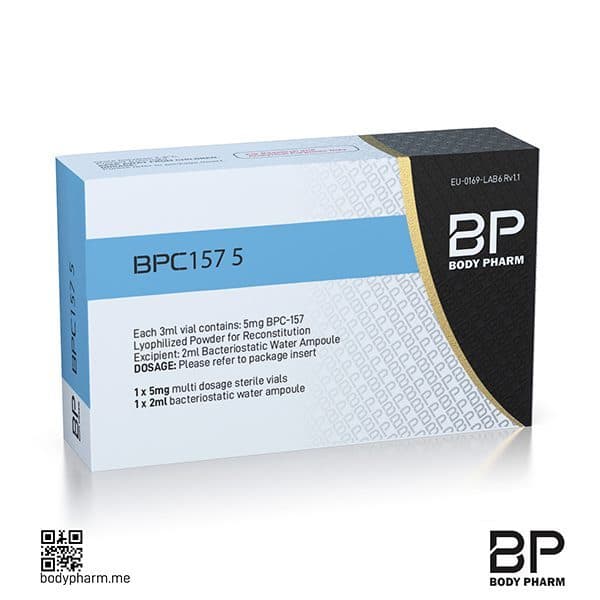
Body Pharm BPC 157 5 Vial
R390.00
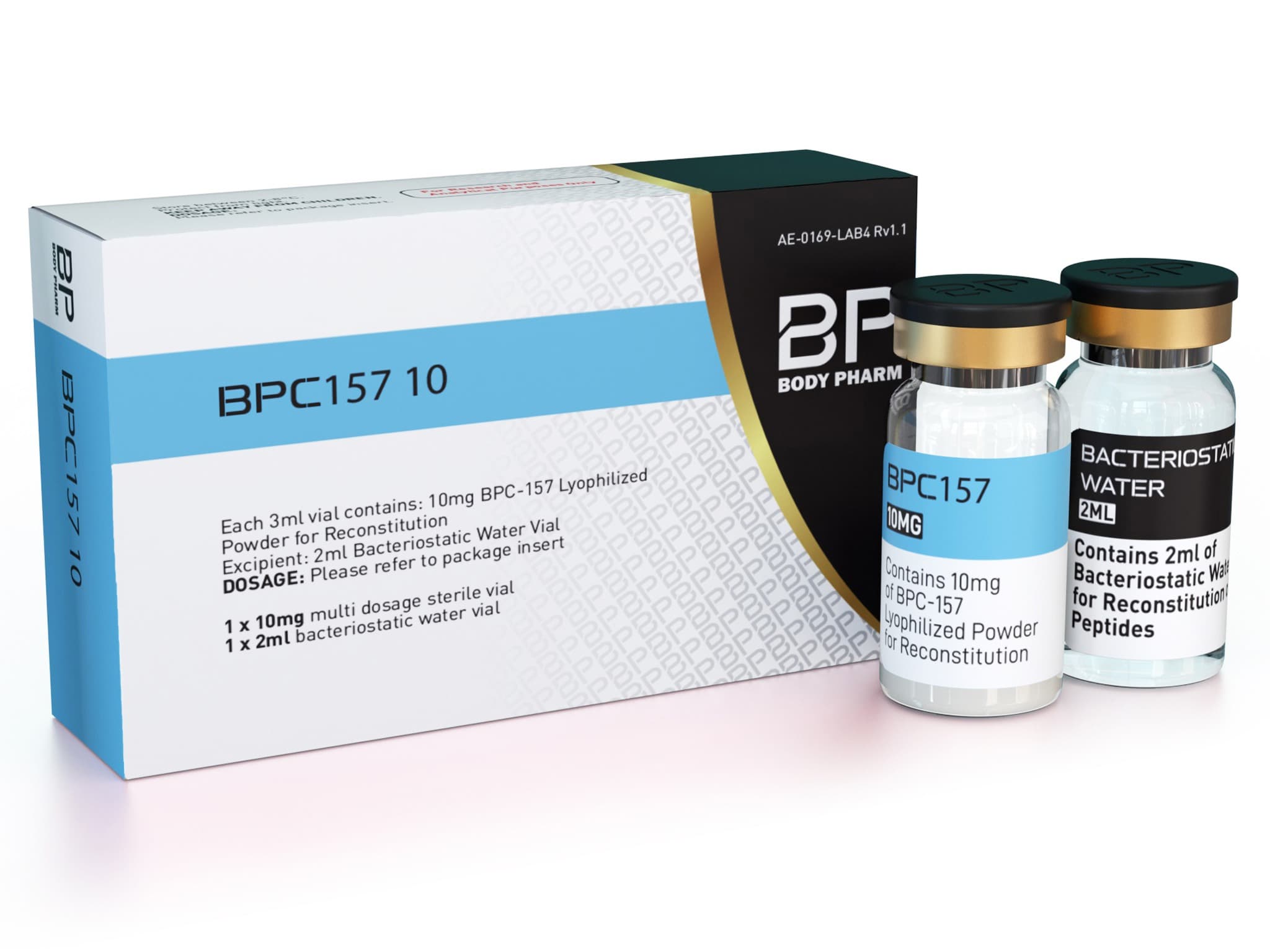
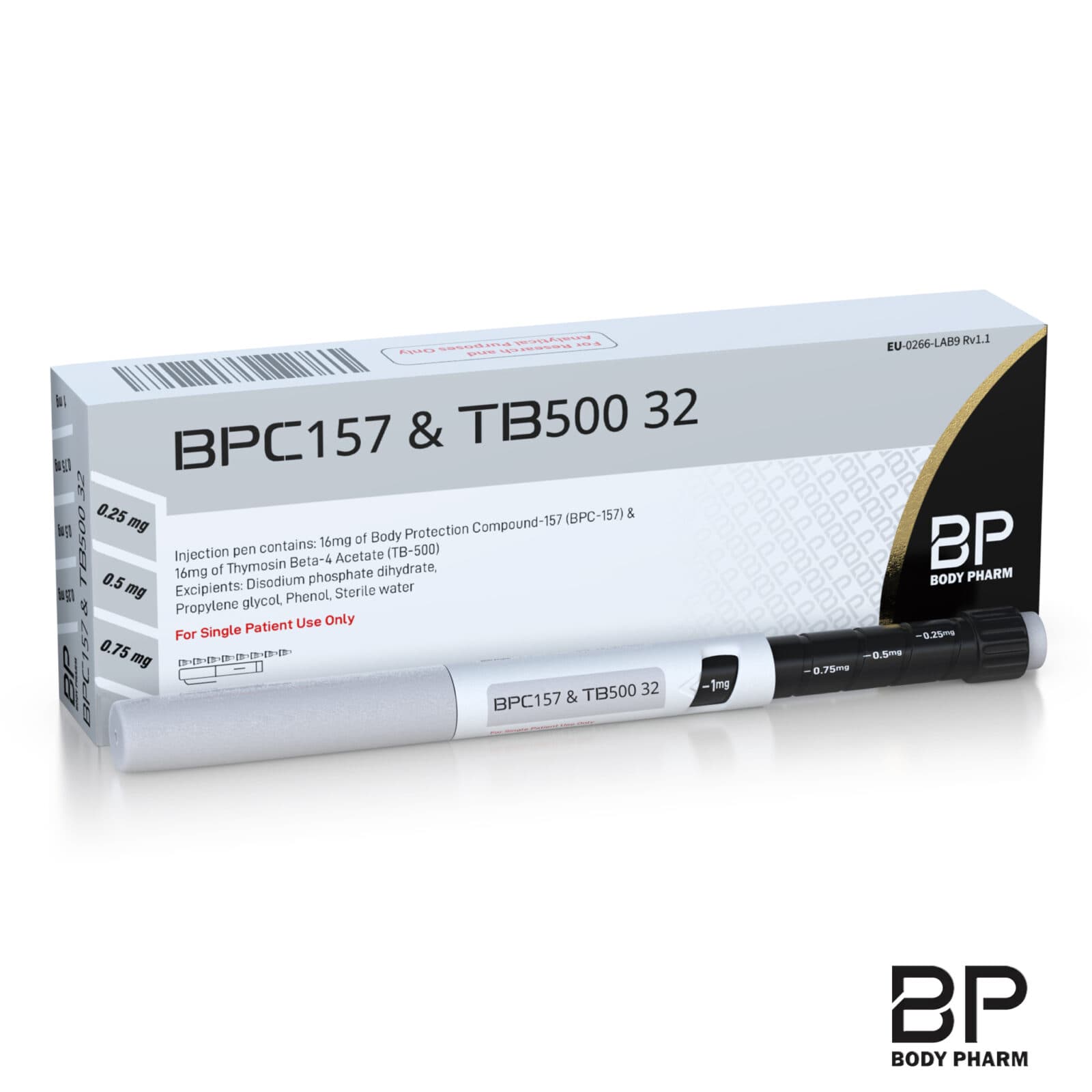
Body Pharm BPC 157 & TB500 32 pen
R2 100.00
BeSkinny supplies BPC-157 as a third-party tested research peptide, shipped cold-chain from within South Africa. The easiest way to buy it is the fixed-dose BPC-157 + TB500 injectable pen — no reconstitution, no vial maths.
Read the legal context first:
- BPC-157 is not a registered medicine on the SAHPRA register and is not a scheduled substance under the Medicines and Related Substances Act 101 of 1965.
- It is sold as a research peptide, not for human consumption.
- Beyond early-phase safety trials run as PL 14736, no completed peer-reviewed human efficacy trial has been published as of 2025.
Key Takeaways
- BPC-157 is unregistered in South Africa but not criminalised; it is sold as a research peptide under the Medicines and Related Substances Act.
- BeSkinny stocks BPC-157 as part of a pre-filled BPC-157 + TB500 pen, third-party tested and cold-chain shipped.
- Animal studies show potential for gut, tendon, and ligament healing, but no completed human clinical trials exist.
- Request a batch-specific Certificate of Analysis before purchasing.
- Use the Peptide Reconstitution Calculator to determine exact bacteriostatic water volumes if working from a lyophilised vial.
What Is BPC-157? The 60-Second Science
BPC-157 is a synthetic pentadecapeptide (15 amino acids) derived from a protective protein sequence found in human gastric juice. You'll also see it called Body Protective Compound 157 or Pentadecapeptide PL 14736.
Research interest clusters in four areas, all still pre-clinical or anecdotal in humans:
- Gastrointestinal healing, animal models of ulcers, inflammatory bowel disease, and oesophageal damage show reduced lesion area and improved mucosal histology in rodent studies.
- Soft-tissue and tendon/ligament repair, rat studies on Achilles transection and muscle-crush injuries demonstrate faster fibroblast outgrowth and functional recovery versus saline controls.
- Joint and ligament recovery, pre-clinical work on knee ligament and cartilage healing, though no human trials have been completed.
- Neuroprotection and vascular signalling, emerging animal data, not yet replicated in humans.
The honest 2026 position: no completed, peer-reviewed human randomised controlled trial of BPC-157 has been published, and no South African ethics-approved human study is registered on SANCTR. Everything is supplied as a research peptide. Buyers planning to reconstitute injectable vials will want a peptide reconstitution calculator to get the dosing maths right before opening anything.
SAHPRA Status: Is BPC-157 Legal in South Africa?
BPC-157 is not registered as a medicine on SAHPRA's medicines register as of 2026, and it is not a scheduled controlled substance under the Medicines and Related Substances Act 101 of 1965. That puts it in a regulatory grey zone where it is sold as a "research peptide" rather than an approved therapeutic product. Verify the live register at sahpra.org.za before you transact, because the classification can change.
Short version for buyers:
- SAHPRA (South African Health Products Regulatory Authority) is the statutory body that registers medicines and regulates health products under Act 101 of 1965.
- BPC-157 has no SAHPRA registration for human therapeutic use in 2026 (confirm on the SAHPRA register before purchase).
- It is not a scheduled substance, so possession is not criminalised the way a Schedule 5 or 6 medicine would be.
- It is sold "for research use only, not for human consumption" to avoid being treated as an unregistered medicine for human use.
- Personal importation and self-administration sit in a legal grey area. No clean precedent confirms either as lawful.
- The Act's section 14 prohibition applies to selling, advertising, or supplying any unregistered medicine for human use.
Disclaimer (read this)
This section is general information, not legal or medical advice. No completed peer-reviewed human RCT of BPC-157 has been published, and no SANCTR-registered South African human trial exists as of 2026. Consult a registered South African healthcare professional before considering BPC-157 for any health purpose, and verify the current SAHPRA status yourself at sahpra.org.za. If you proceed with an injectable vial for research purposes, use a peptide reconstitution calculator to work out concentrations accurately before opening anything.
BPC-157 Formats
BPC-157 is researched in several formats: oral capsules, lyophilised injectable vials, nasal spray, and a pre-filled injectable pen. None has been validated in a completed peer-reviewed human clinical trial, so dosing is extrapolated from animal data and practitioner experience.
Oral capsules. Capsules are the easiest format to administer — no reconstitution, no needles. Pre-clinical work suggests oral BPC-157 acts locally on the gut lining, which is why capsules are commonly chosen for bowel-focused use rather than systemic effects.
Lyophilised injectable vials. Shipped as a freeze-dried powder that needs bacteriostatic water before subcutaneous use. Use the Peptide Reconstitution Calculator to work out the exact mixing volume before opening anything.
Pre-filled injectable pen. The BPC-157 + TB500 injectable pen at BeSkinny is the fixed-dose option for buyers who prefer a ready-to-dial device over reconstituting a vial.
Format vs use case
| Goal | Best-fit format |
|---|---|
| Gut or bowel repair | Oral capsule |
| Systemic soft-tissue, tendon, joint | Injectable vial or pre-filled pen |
| Needle-averse buyers | Capsule |
| Fixed-dose convenience | Pre-filled pen |
Format affects both dose and absorption. Switching format means recalculating mg per administration. No BPC-157 format has SAHPRA approval for human therapeutic use in 2026.
BPC-157 for Joint Recovery: What the Research Shows
BPC-157's joint-recovery reputation rests almost entirely on rodent studies and clinic-level anecdote, not human RCT data. As of 2026, no large-scale, peer-reviewed human clinical trial on BPC-157 has been published or registered on ClinicalTrials.gov or the South African National Clinical Trials Register. Weigh that gap before spending.
The pre-clinical literature consistently reports in rat and in vitro tendon, ligament, and muscle models:
- Accelerated tendon-to-bone healing after surgical transection, with faster fibroblast outgrowth in cell culture. The peptide appears to promote cell migration and proliferation at the injury site.
- Reduced local inflammatory markers and improved collagen organisation at the injury site in rat Achilles and medial collateral ligament models.
- Faster functional recovery scores in rat muscle-crush models versus saline controls. These gains have not been replicated in human subjects.
- Gut-mucosal healing effects in rodent colitis models, which is the original indication the molecule was investigated for.
- No dose-response or safety data from controlled human trials to translate any of the above into a clinical protocol.
Buyers concerned about the absence of human data should consult a registered healthcare professional before proceeding.
The Wolverine Stack: BPC-157 + TB-500
Some researchers pair BPC-157 with TB-500 (thymosin beta-4 fragment) for soft-tissue recovery, on the theory that the two act on different repair pathways. BeSkinny stocks a fixed-dose BPC-157 + TB500 injectable pen for buyers who prefer not to reconstitute lyophilised vials. If you do buy vials, the Peptide Reconstitution Calculator gives the exact bacteriostatic water volume per target dose. Human evidence for the stack specifically is absent in 2026.
BPC-157 for Gut Healing: Gastroprotective Evidence
BPC-157 was originally isolated from a partial sequence of a protective protein found in human gastric juice. Gut healing remains its most-studied application in animal research. That origin is also why oral capsules dominate gut-focused use: the peptide acts locally on the GI mucosa, so systemic absorption matters less than for tendon or ligament work.
Pre-clinical findings most often cited for gastroprotective use include:
- Healing of induced gastric and duodenal ulcers in rat models, with reduced lesion area versus saline controls.
- Protective effects against NSAID-induced mucosal damage in rodents.
- Improvements in colonic histology in chemically induced colitis models, the original IBD-adjacent line of research.
- Reduced markers of intestinal hyperpermeability ("leaky gut") in animal studies, though the mechanism remains unclear.
- No completed, peer-reviewed human clinical trials confirming any of these effects in patients with gastritis, IBD (inflammatory bowel disease), or functional bowel disorders as of 2025.
BPC-157 is not an approved treatment for gastritis, peptic ulcer disease, IBD, IBS (irritable bowel syndrome), or any diagnosed GI condition in South Africa. Nothing above should be read as medical advice. If you have ongoing gut symptoms, see a registered gastroenterologist before self-experimenting.
How to Reconstitute BPC-157 Injectable Vials
Reconstituting a lyophilised BPC-157 vial means adding bacteriostatic water to the dry peptide powder so it can be drawn into a syringe. Bacteriostatic water is sterile water containing 0.9% benzyl alcohol, which suppresses microbial growth and lets a multi-dose vial be used over several weeks. Any reconstitution and injection of research peptides should be done under qualified medical supervision. This section is procedural background, not a how-to-self-inject guide.
The general process:
- Let the vial and bacteriostatic water reach room temperature before mixing.
- Wipe both rubber stoppers with an alcohol swab.
- Draw the bacteriostatic water into an insulin syringe, then slowly inject it down the inside wall of the BPC-157 vial, not directly onto the powder pellet.
- Do not shake. Swirl gently until the solution is clear; the peptide dissolves within seconds.
- Label the vial with the reconstitution date.
For the volume of bacteriostatic water to use per mg of peptide, which determines how many micrograms each syringe unit delivers, use the Peptide Reconstitution Calculator rather than guessing.
After reconstitution, store the vial at 2–8°C and use within roughly four weeks refrigerated. To skip reconstitution entirely, the BPC-157 + TB500 pre-filled pen arrives ready to dial a dose.
What to Look for When Buying BPC-157
Run any BPC-157 product through this checklist before paying:
- Third-party Certificate of Analysis (CoA). HPLC (high-performance liquid chromatography) purity analysis from an independent lab is the gold standard because it verifies the actual peptide content and purity of the batch. BeSkinny supplies a COA on request — walk away from any seller that cannot produce one.
- Concentration and format clearly stated. A legitimate listing tells you mg per vial, μg per capsule, or mg/ml for liquids, because this is essential for safe dosing. Vague "BPC-157 vial" listings without strength are a red flag.
- Storage guidance. Lyophilised vials should be stored at −20°C long-term or 2–8°C if used within three months; reconstituted solution keeps roughly four weeks refrigerated.
- Registered South African business. Look for a physical address, a company registration number, and a working ZA phone line. BeSkinny ships from within South Africa with local accountability.
- Research-use disclaimer. BPC-157 should be labelled "not for human consumption", in line with section 14 of the Medicines and Related Substances Act 101 of 1965.
- Tracked, temperature-aware delivery. BeSkinny ships cold-chain with tracking.
- SAHPRA status. BPC-157 is not a registered medicine. Any seller claiming it is "SAHPRA-approved" is misrepresenting the product.
For injectable vials, work out your dose volumes with the Peptide Reconstitution Calculator once your CoA and storage questions are answered.
Frequently Asked Questions: BPC-157 South Africa
Is BPC-157 legal in South Africa?
BPC-157 sits in a regulatory grey area as of 2026. It is not a scheduled controlled substance under the Medicines and Related Substances Act 101 of 1965, but it is also not a registered medicine on the SAHPRA register. It is sold as a research peptide labelled "not for human consumption".
What's the difference between BPC-157 capsules and injectable vials?
Capsules are pre-dosed oral units aimed at gut-focused protocols because the peptide acts locally on the GI mucosa. Injectable vials are lyophilised powder that you reconstitute with bacteriostatic water for subcutaneous use, allowing systemic distribution. Bioavailability, dosing precision, and storage requirements differ. All use remains experimental with no approved human indication.
What is the Wolverine Stack?
The Wolverine Stack is the informal name for combining BPC-157 with TB-500 (thymosin beta-4 fragment) for soft-tissue and tendon research, because the two peptides are theorised to work on complementary pathways. BeSkinny stocks a fixed-dose BPC-157 + TB500 injectable pen. No published human trials validate the combination as of 2026.
How should I store BPC-157 after purchase?
Store unreconstituted lyophilised vials at −20°C for long-term storage, or at 2–8°C if used within three months. Once reconstituted with bacteriostatic water, keep the solution refrigerated at 2–8°C and use within roughly four weeks. Use the Peptide Reconstitution Calculator to work out dose volumes.
What purity should I look for when buying BPC-157?
Look for ≥98% HPLC purity backed by a batch-specific Certificate of Analysis from an independent lab. This confirms the peptide's identity and purity. Reject any seller who cannot produce a batch CoA — BeSkinny provides one on request.
Next Step
Confirm SAHPRA status at sahpra.org.za on the day you order, request a batch-specific CoA from BeSkinny, then order the fixed-dose BPC-157 + TB500 injectable pen — third-party tested, cold-chain shipped, card or EFT at checkout. Working from a lyophilised vial instead? Reconcile your target dose against vial size with the Peptide Reconstitution Calculator before you pay.
References
- Brain-gut Axis and Pentadecapeptide BPC 157: Theoretical and Practical Implications. Current Neuropharmacology, 2016.
- Gastric pentadecapeptide BPC 157 accelerates healing of transected rat Achilles tendon and in vitro stimulates tendocytes growth. Journal of Orthopaedic Research, 2003.
- The promoting effect of pentadecapeptide BPC 157 on tendon healing involves tendon outgrowth, cell survival, and cell migration. Journal of Applied Physiology, 2011.
- Pentadecapeptide BPC 157 (PL 14736) improves ligament healing in the rat. Journal of Orthopaedic Research, 2010.
- Effective therapy of transected quadriceps muscle in rat: Gastric pentadecapeptide BPC 157. Journal of Orthopaedic Research, 2006.
- Multifunctionality and Possible Medical Application of the BPC 157 Peptide—Literature and Patent Review. Pharmaceuticals (Basel), 2025.
- Medicines and Related Substances Act, 1965 (Act No. 101 of 1965), as amended. South African Health Products Regulatory Authority (SAHPRA).
- South African Health Products Regulatory Authority (SAHPRA). SAHPRA, 2026.
- Bacteriostatic Water for Injection, USP — label. DailyMed, U.S. National Library of Medicine.